Wednesday, November 11, 2009

How it really happens 4 - 553

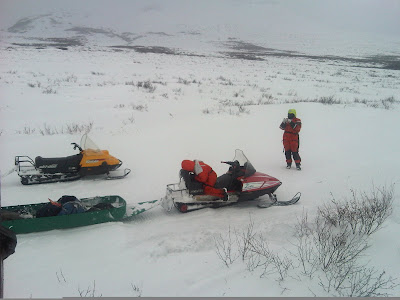
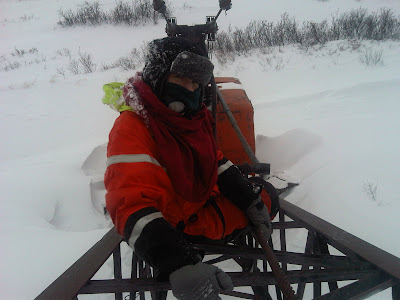
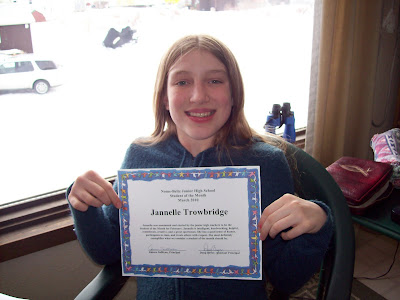
We have settled into Nome.  It has been a crazy month.  About six hours after landing in Nome I got a job climbing wind towers on the largest wind farm in Alaska.  Deb has gotten a job as the acting director of head start over 13 schools.  Jannelle and Bianca are in school and loving it.  We have found an apartment vacated by a mining crew that is fully furnished, including the biggest television I have ever seen.  We now have a TV, the first and last TV we owned we sold one year into our marriage.  I had an interesting conversation with the internet provider here who only sells internet bundled with a cable package.  She could not believe I didn't want cable.  "You have never been through a winter here have you?", she said.  We worked out a plan that included a cell phone rather than cable.  We have also borrowed a 4wheel drive full size van that gets about 5 miles a gallon.  It sorta even stops when you push on the brakes.  Precipice is out of the water and safe in a cradle.  The boat pulled out after us was destroyed when the  trailer's hydraulic arms snapped off.  We were glad it wasn't us, but we feel their pain.  Now we aren't sure how we are getting back in the water.  Hopefully the trailer will be repaired by then.  Our liferaft hasn't shown up, and we don't expect it to.  The engine on Precipice is apart and parts are on order.  We have decided to repair the old engine for now.  We lose six minutes of daylight every day until we only have four hours of sunlight Dec 21.   We make up for that in June with 21 hours of sunlight.  The town of Nome is truly a frontier town.  My neighbor across the street has his airplane parked in his front yard.  Every home has at least one 4wheeler and a snowmobile parked in front of it.  We have been helped by many here from lending us a vehicle (thanks Glen and Sue) to giving us a vanload of lumber to build a cradle (thanks Jim).
My beloved ASUS W2J laptop died after more than three years of service.  I have purchased a new laptop, but I have not had a chance to download everthing out of the old into the new.  I do not have skype set up, nor do I have my Adobe Suite installed.  I haven't caught up on email yet either.  So email, phone, and website are all still behind.  I will get to it.  What have I been doing?  I have built a cradle for the boat and dissasembled the engine.  I have been preparing a course I am teaching  back in Grand Rapids (more on that later) I have been writing querys for magazines, and I have been doing all the things that we have put on hold for the last five months to pull off this trip.  I find myself very busy.
We are going to be back in Grand Rapids, the first time in over 500 days.  We leave here Dec. 20 and return the first week of January.   I will be training a couple of technicians for a local shop and the girls will be on winter break goofing off with family and  friends.  It will be good to be back for a short while.

Precipice safe in her homemade cradle


Our trusty four wheel drive greenhouse gas machine.


The boat after us was destroyed by the hydraulic rams breaking.  Ouch.


I spent three weeks climbing 100 foot towers.


The harbor froze over the day after we pulled precipice.  The ocean is just starting to freeze.


Friday, October 30, 2009

How it really happens: Part 3 - 541

"I will update my site with pictures and more details of our adventures but I want to start with first things first. We by ourselves didn't get through the passage. A whole bunch of people got through the passage with us. We received an unbelievable amount of help pulling this off and I am going to start by recognizing these folks."

5. Dan and Carrie Elzinga: Dan and Carrie showed up at our doorstep one day to invite us to attend their house Church. I had on an angry tear stained face, my hands were covered in work grease, my eyes were red, and Deb and I were in the middle of an argument Deb and I had also just got done with a horrible house Church experience the month before. I told them that we would come, but that I wasn't really sure we were interested in a house Church right now (and thinking to myself that I wasn't interested in Church of any form period.) They still invited us over. These two people just plain took care of us, and showed us love. They put up with our kids, our dog, my whacked sense of humor and became good friends. Dan is humble and gentle (in the Matthew 11:29 sense, not a weak baby sense), and Carrie goes between wanting to kill me or hug me but always loves. When it came time for us to leave, they let us borrow their car and worked hard along side of us as we did the hardest part of this whole thing: Leaving. They also took under their care our very loved and very needy dog, Sheba. We felt very good about that. They discipled us, loved us, took care of us, fed us, and taught us. We needed them. The only thing we had to give back was friendship and prayer. We are thankful for that friendship.

Thursday, October 29, 2009

How it really happens: Part 2

Giving thanks part 2:

4. Graham Dillabough: I really should thank the entire group of Ham Radio operators who make up S.O.N.R.A. I will. But Graham really stands out. When I started the project of installing a high frequency amateur/marine radio system with global email capability on my boat I had no idea the learning curve I would face. Graham stuck with me through the entire curve. We first started off by building a bookshelf, but the next project was building a dual VHF/HF SWR meter. Probably most of you don't know know what this is, and neither did I. I had worked 20 years in electronics, but had little experience in RF (Radio) energy. Enter Graham. I am completely used to being the person with the technical experience and it was nice for once in my life to have someone who thoroughly understood something technical that I didn't and was willing to share it. I became the "grasshopper" and he became master Po. We blew through a spring worth of Saturdays, weekday late night sessions, three radios, and a half dozen ground solutions before we had a rock solid email and emergency radio system with redundant power and antenna's. This system worked flawlessly allowing me to communicate with the NW Passage net and update my blog through HF email throughout the entire passage. In the meantime, Graham was a patient friend who really made my winter in Newfoundland worth it. Graham also owns a Lotus 7, bonus. When I come back to Newfoundland, it will be to see Graham. Thanks Graham.

Wednesday, October 28, 2009

How it really happens: Part 1

We just completed the Northwest Passage. Unlike my parents predicted, their grandchildren are not dead or maimed. Unlike we feared, Precipice is still floating and can sail. We are still married, and are sleeping in the same bed which is nice after a summer of sleeping separately. The enormity of tackling the NW Passage is not something easily transferable to landlubbers, and most sailors don't get it either. I am getting emails from people asking for advice on going through the passage and I now know why so few of the emails I sent asking the same questions were not answered. People didn't want to be responsible. I will update my site with pictures and more details of our adventures but I want to start with first things first. We by ourselves didn't get through the passage. A whole bunch of people got through the passage with us. We received an unbelievable amount of help pulling this off and I am going to start by recognizing these folks. As soon as I do this, as anything with words does, I am sure to forget or offend someone. I still must start. As for those who actively worked against us, well, you can eat my wake.

1. Rachael Scholten: Rachael is my wife's sister. I first met Rachael when she was eight and in pigtails. We have always had fun together and our friendship took off from the beginning. It probably would have faded away when Rachael "grew up" except for her buying a battle scarred farm truck that should have been towed away rather than be a commuter to college. Rachael brought it to me because she couldn't stop, and later because it had no heat, and later because it wouldn't stay running and and and . . . The end result was we ended up talking to each other quite a bit in her first year of college. She was having a crisis because although she enjoyed her business classes, she didn't want to work "in business". I told her she would make a great nurse. She had had the same thought earlier that morning. Two days later she had changed her major. We have come a long way since those days and Rachael is my closest friend. Without Rachael's friendship the dream of the trip would not have started, and without Rachael's support we would have aways been a day late and a dollar short for almost all of the steps it took to get through the passage. Thank you God for that truck. And for Rachael.


2. Brian Brunsting: Brian Brunsting was my second Calvin College roommate. My first semester I was paired up with a person who was permanently attached to his girlfriend. I opted out of the midnight pre-cellphone dorm room calls and went potluck and got Brian in exchange. If only he knew now what he didn't know then he probably would have gone screaming. Mr. Brunsting and I have been friends since then. I am one of the few in Grand Rapids that knew him before he met his wife Julie and got all respectable. Before then we were a crazy pair, brazenly calling Dominoes pizza every night one minute before closing (12:30) and then finding the money for it somehow after the call. We dropped gourds at whim. The art paparazzi feared us. Since those days he has become a mild mannered graphic artist who can't come to the phone right now. But make no mistake, he is my secret weapon. With his help I can take over companies, build websites, make invincible resumes and make the government and my clients believe that I still reside in Michigan. I am greatly indebted to Brian for handling my mail, which would kill a lesser man. The stress of opening past due bill after past due bill would have most crying like a baby begging for mercy. Not Brian. Thank you my friend.


3. Patrick O'Neill: I was bumping my head into something but I couldn't figure out what. I had successfully gotten rid of everything material in our lives that didn't have to do with our goal of embarking on a major sailing trip. I had eliminated our debt, and in the process of getting ready I had slipped out of a 20 year career trajectory that had me training technicians and professors nationwide about how to diagnose automotive electronics. I was waking up in the mornings and going like gangbusters, but I was internally tired and doubting myself. I initially met Pat ten years earlier when I lost to him in court over a misdiagnosed starter. Instead of leaving the courtroom as enemies we both left the courtroom thinking better of the other. I entered thinking he was a greedy old man, and left admiring the thoroughness and care that he took in defending his client. He entered the courtroom thinking me a foolish young buck that couldn't see past my own pride. We both were wrong, and we left as friends. I really think this friendship saved the trip, and me. Pat believed in me. I don't really know how he sees what he does, but he systematically showed me that I was going somewhere and he didn't for a minute show any doubt about the trip. It was his belief in me that allowed me to take the jump and go for it when the passage opened up in 2008. Before I met Pat, something inside of me was dying - the dead at 35 buried at 75 thing. Pat is almost 80. He still has much to give. Thank you Pat, for the gifts you gave to me. Oh, and Pat, I will finish that book.

Many more thanks to come . . . .

Wednesday, October 07, 2009

Nome Part Deux

Our dingy is persistently missing. We are outside of our trip parameters, so we are going to pull Precipice here - a plan "C" that was something we had prepared for. Right now we are looking for jobs, trying to find housing, enrolling the kids in school, and getting Precipice ready for winter. Real winter. At least that was the plan as of 8AM this morning. Thank you to everyone who have left comments, and sent us email. I just cleaned out my email account of spam and I have over 400 emails that I have to respond to. I haven't had real Internet access since August 27. Sorry for the delay.

Rolland's 7 Handy Trip Parameter Guides:
1. Are you still having fun? - Yes
2. Is all safety equipment intact? - No, Halocline the dingy/liferaft is missing.
3. Are you getting stronger or weaker? - Stronger.
4. Is your equipment getting hardened or is it breaking down? - Engine out of commission.
5. Do you have adequate spares? - Not enough valve springs.
6. Have you kept to your trip schedule/weather benchmarks that you made when you weren't tired and cold? - We made the Arctic Circle before the end of Sept. but we haven't made Dutch Harbor by Oct. 5.
7. Is everyone healthy? - Yes.


If any one of these seven are negative, I abort the trip and go to the nearest point of safety. We have three negatives. Time to pull.

Wednesday, September 30, 2009

Nome

We have made it into Nome. I was getting really good at making Valve springs for myself. We have had No wind (with a capital N) since our friendly little storm left us behind. Any movement you have seen since then is me getting just a little bit more out of the engine. I was actually getting about an hour of runtime out of each valve spring redneck special. The last runtime was for two and a half hours. Then, just when I thought I was going to make it into Nome harbor, I discovered that the Valves on this engine CAN fall into the cylinder, requiring me to pull the cylinder head. We were four miles out. Bobbing around. I called into Nome, and traded our shotgun for a tow back into town. We are tied up to a floating dock. WE ARE TIED UP TO A FLOATING DOCK! Sorry, just got a little excited there. We can, you know, step off of our boat and go for a walk. Nome itself is a real town. With roads. Deb says to me as we are walking, "You know, this is kind of exciting." Amen honey, amen.

Rolland

Tuesday, September 29, 2009

Rough night

We spent the night hove to as the wind climbed to over 30kts. The waves never got over 12 feet, but they were square waves and it seemed that every hour a wave much bigger than the rest would come through. The wind was shifty and it was difficult to remain hove to and hide behind our slick. Our dingy is gone, our spinnaker pole tried to escape its mount, and our windvane sustained some easily repairable damage. We had a wave hit us in such a way early last night that I thought we had hit something solid. At about 4AM, a wave hit that pushed us over on our side over 45 degrees. Not a knockdown, but close. The wind was gusty. It stayed strong until about 10AM, and then suddenly left. Now we are bobbing around in the leftover waves, with less than 5kts of wind to move with. Precipice is fine, the rigging is all good except for some chafing wear. We hope to make Nome late tomorrow.

Sunday, September 27, 2009

Phase III - the lower 48

We have crossed the Arctic Circle, completing our quest to navigate the Northwest Passage. Precipice is now the fifth wooden vessel to have ever made it through the Northwest Passage. Less than fifty private vessels have gone through, and less than 120 vessels of any type have gone through. It is a long, long journey. We also made it south of the Arctic Circle before the end of September, another bench mark, barely. Now our goal is to get to the lower 48. We plan on spending a couple of days in Nome doing laundry, restocking our food supply (we are out of snacks, we have another month of food in the hold), and hopefully repairing the diesel engine. We have completed 2/3 of our journey.

On our left, Alaska is a beautiful panorama of snow capped mountains. On our right, is the dark outline of Russia. We are in the Bering Strait. I used to have a map made of wallpaper that took up an entire wall of my childhood bedroom. I dreamed of what it would be like to go through the strait, and now 25 years later I am able to sail through it with my family. It is simply amazing.

We have very little wind today and we are charging along at 2 knots, a Sunday break. It is bright beautiful sunshine, and we are glad in our hearts.

Rolland for the Trowbridges

Saturday, September 26, 2009

Motor

I woke up screaming. I was yelling "Shut it off" before my groggy brain realized why. Bianca was also yelling the same thing, and then Jannelle chimed in our off tune chorus. Our engine was making the worst possible noise. Everyone else only heard it as ten hideous malfunctions mashing against each other. My ears heard valves smashing into pistons, most likely from jumped timing. It was two AM. Of course. We had been motoring in completely calm wind, but the ocean was still angry from the three days of sustained gale force winds so there was a large swell rolling through. Without the steadying force of wind and no motor we started bobbing around with all the grace of an old discarded Styrofoam bait tray. Jannelle and I prepared for engine surgery. I first pulled the belt off the alternator in a wishful attempt hoping that the cracked case finally had failed. The alternator, an easy fix, was just fine. I pulled the valve cover. The number two cylinder exhaust valve spring was in three pieces and the valve had dropped down, hitting the piston. On almost all engines the valves are at an angle to the piston, so usually the valve edge acts as a knife that destroys the piston. This engine is descended from some ancient Norwegian tractor and the valves move straight up and down with the pistons. I turned the engine over by hand and the valve moved up and down with the piston. It wasn't bent. I just happen to have a spare valve spring and keepers so I removed the rocker arms and turned myself into an improvised valve spring compressor. Getting a new valve spring on can be tricky standing in repair shop that happens to be anchored to an immovable 80 ton piece of concrete. Getting a new valve spring on with the angry Chuchki sea throwing you around while working in a cramped space wearing only your underwear is not the definition of ideal working conditions. After having a discussion with the engine about its ancestors, and all valve springs ancestors in general, I was able to work up enough anger to simultaneously push down a valve spring with my bare hands while balancing and dropping two valve keepers in their exact required positions. After reassembly, Deb pushed the big red start button and the engine throbbed to life and Precipice resumed on course as if nothing had happened. Being now completely awake, I took my watch. During my watch I patted myself on the back for having the spare parts needed, and knowing how to use them. I was in a fine mood even though I missed being able to sleep for more than 45 minutes on my last off watch. I was pretty happy with myself until three hours later Bianca was at my face yelling "shut it off". By this time a gentle breeze was blowing, so we already had some sail up and things were stable. Removing the valve cover, we discovered the intake spring on the same cylinder was broken in three pieces. I have replaced many valve springs on engines, but never two on the same engine. I didn't have a second spare. But, I now had two large broken pieces of valve spring. So, after about an hour of experimenting with the two pieces I found I could create one valve spring doubled up in the center using stainless steel rigging wire. I repeated the aforementioned ancestral discussion, and installed my second valve spring for the night. Pushing the big red button gave us the reassuring throbbing diesel sound. After about ten minutes we shut it off as we didn't need the iron sail since the big white billowy ones were working all on their own. How long will the repair last? My guess is about ten minutes. Fortunately, we have had perfect wind since then (last night) and are making good on our destination - Nome.

I wonder what the chances of finding a valve spring for a 1978 Sabb 2h diesel in Nome Alaska are?

Everyone is good, all is well.

Rolland for the Trowbridges.

Thursday, September 24, 2009

Free at last.

We ended up spending a week in Wainwright. At first we felt like we had made the wrong choice because the weather we hid from didn't end up being as bad as we thought, but the next front that came through changed our minds. We had constant 35 knot winds for three days, with gusts over 50 on Monday night. Our little anchorage got whipped right up. As the winds picked up, they emptied the lagoon we were in so that the 8 foot anchorage slipped down to 5.7 feet. When waves would go by we would touch bottom. Touching bottom is never good and the noise it makes is the worst part. It sounds like pulling your car to far forward in a parking spot and scraping the curb, magnified by ten. Barunch! Each time we would touch bottom, it was like someone shocked Bianca with a Taser. Barunch! She was beside herself. There wasn't one thing I could do about it until the winds died down. I went outside to check our anchor line, and it was tight enough to walk on and walking on deck was difficult from the gusts. We discovered that if we were in the front cabin, the boat wouldn't touch bottom. We all got our reading quota in for the month though. I read "The Jungle" by Upton Sinclair a book about mostly white immigrants who struggle to make it in the huge meat industry in Chicago at the turn of the century. Then I read Alex Haley's "Roots", a book about seven generations of a black mans ancestors from being abducted in Africa to gaining freedom from slavery. Now I am reading "Exodus" by Leon Uris, a book about the struggle of the Jews to win the right to live in Israel. I didn't plan this, as each book was given to us by a different person. After reading these three books, I have gained a new perspective on the little struggles that we have been having with weather and time as just that, little. If you are feeling like your life is difficult, read these three books and you will realize that you are rich. Filthy rich.

Yesterday it took three boats to get us out of Wainwright. One boat pulled sideways on our mast, one boat pulled us forward, and the other took depth soundings with a paddle - this being the only way to check depths in this town. It took nearly the whole day just to get us out. We are impressed with the tenacity of the people who live here. They just plain did not give up, even though getting a boat that draws five and a half feet and weighs ten tons through three feet of water is just about impossible. Afterwards a good chunk of the town lined the shore in a procession of four wheelers to see us off.

It feels good to be moving again. Amazingly, we suffered little damage. Precipice is starting to look a little beat up. Between the ice, dragging through sand, and the fact that people in the North just motor right up and bang into your boat as normal operating procedure we have lost an amazing amount of paint on this trip.

But we are still floating. Free.

Thursday, September 17, 2009

Weathering

At first we had decided that even though the weather was going to be bad, we could handle it. Then the next weather report came in calling for winds in two days 5kts higher than the last report. We thought, OK we can still handle it and kept sailing. Then the next report came in with wind 5kts higher than that with gusts even higher. It was time to find a spot to weather. There really aren't any cruising guides for this area so we made for the nicest looking port on the map, 42 miles out of our way - Wainwright. We found the depths there to be 2 feet lower than charted as discovered by our depth sounder, namely out keel. We ended up grounding four times on our way in, pulled off by the local rescue boat captained by Chuck Wagon (that really is his name). Aparentely when a storm is coming the water level here drops. Nice. We are here, while the wind howls over our head, hanging on our trusty CQR anchor. We are glad for this little bit of rest since we have been going non-stop since Greenland a month ago (with frantic refuel breaks). It was nice to sleep more than four hours last night. We will likely be here until Sunday night or Monday morning. We needed the break. Right now it is too windy to launch our dingy to get into town, but we hope to on Saturday when things quiet down a little. We get to listen to everything that is happening in town though, because the entire town seems to talk on marine channel 9. Birthdays, announcements, greetings, and parents telling children to come home are all heard, just about continually. We are warm, resting, and everyone is OK.

Rolland for the Trowbridges

Monday, September 14, 2009

Turning the corner

We passed Point Barrow this morning, the most northern part of the USA. We have also sailed the Dry Tortugas in Florida, the most southern part of the USA. Turing the corner here means that we get to finally go south. The last week has been spent slowly going north again as we worked our way west along northern Alaska. It was getting colder and colder. We have crossed six time zones going west on this trip. It is good to be finally going south. It is good to be back in the USA. Today a real live person came on the radio and gave the weather and he sounded . . .normal. We didn't get to go into Point Barrow, but from the outside it looks like a real city. I bet there is even a McDonalds. I will Google this once we get internet. Precipice, Deb, Jannelle, and Bianca have all been out of the US for more than a year. Every little thing USA we see or hear is somehow comforting. Weird. We could just walk up to anybody and legally ask for a job! We could buy a gun! We could trade in our junk car for a government bail out! I could buy a gallon of something! I can tell a local that it is 35 degrees out today! The possibilities are endless.

The weather is supposed to be nice today and tomorrow and then get nasty. I will be waiting until tonight's weather briefing to decide if we are going to find a hiding spot or not. We are sailing now after two days of absolutely no wind and it is good.

Rolland for the Trowbridges

Thursday, September 10, 2009

Sailing

The most difficult part of the Northwest Passage so far is not the ice, the cold, or the desolate landscape. It is the wind. Or, the absence of wind. I had been told by others who had done the passage to carry enough fuel to be able to motor for at least 1000 nautical miles. This required me carrying an extra sixteen jerry cans of fuel on deck giving me a calm sea motoring range of 1100 nautical miles including heater use. The drawback to this, is that to go 1100 miles I would have to motor for nine days. That is nine 24 hour days. So far, we have ended up using our motor for the entire passage. We either had completely no wind, and I have never seen water so still, or we had wind from the wrong direction and the passage was to narrow to let us use it. The end result is we have spent the last three weeks motoring almost non stop. The throbbing pulsing stinky evil that motoring brings slowly works on you. It literally wears you out. It inhibits conversation. The other difficulty motoring brings is that it means that we have to hand steer, hand on the tiller, 24/7. So, the hard part was - motoring. On the Great Lakes we see sailboat after sailboat motoring along in perfectly good wind. We always wondered what that was like. Now we really wonder WHY? would they motor when they could sail?

Well, we are out of the narrow part of the Passage now (I consider the NW passage to be the entire time you go above the Arctic Circle to the time you go below the circle on the other side, so we are not out yet) and this means we can sail.

And it feels good, and we needed that.

Rolland for the Trowbridges

Wednesday, September 09, 2009

Tuktoyuktuk

We just got done with six days on the water and we are tired. We made it here at 3 AM, tied up to to the first wharf we could find and got woken up this morning by a grumpy dock worker with a power complex who let us know that in order to use that wharf we had to give 96 hours notice and wear a hard hat at all times. So we moved to the "correct" wharf and called for fuel. After he filled our main tank, the fuel delivery driver then started whining about how much time it was going to take to fill up our individual jerry cans and wanted us and the sailboat with us to carry them to the local gas station. I told him that at 8.25 a gallon I felt like the little extra time to go from can to can might just be ok, and that he should try to take care of the other sailboat also. He just shrugged and started filling our jerry cans. So I was ready to call down my mechanics curse on this town, which makes every headgasket in town leak, when the local doctor from the clinic stopped by and asked if we needed anything. If only Tuktoyuktuk knew how close they came . . . .

Thank you, Mr. Doctor. We really appreciated you. We hope Tuktoyuktuk does also.

Thursday, September 03, 2009

Motoring Along

We are motoring in no wind through Dease Strait. Tomorrow and Saturday we are expecting winds up to 30kts, right on our nose so we will likely be looking for a hidey spot since we are neither good at going to windward with a gaff rig, and we don't have the horsepower to pound into waves. You work with what you have.

As far as email goes, it looks like I will be able to connect to Alaska from here on out - I hope.

All is well.

We would like to thank Captain Steve, First Mate Jason and the crew of Nunakput who showed us so much hospitality, especially for the use of their galley table to perform surgery on a sail. True Ambassadors of the North!

Rolland for the Trowbridges

Wednesday, September 02, 2009

Still in Cambridge

We were fueled up, oil changed, water topped off and ready to go this morning. We got invited to breakfast by the ocean tug Nunakput and were finally ready to go when news that a 44' German sailboat had ripped a sail and lost their engine and were limping back. We decided to stay until they made it back, seeing that we probably are carrying the only sail repair materials within about 1000 miles from here. They got towed back by the Coast Guard Auxiliary. I first got their diesel engine going for them, and then Deb and I repaired their sail and canopy cover that had been ripped in the storms 55kt winds - the reason we had skipped Gjoa haven and stayed in Cambridge Bay. Our Sailrite Ultrafeed sewing machine once again proved that it is worth its weight on the boat. They couple on the German boat hadn't really slept in three days and had spent the last two days trying to get their motor going while the sailed under their jibsail alone. We told them to sleep while we worked. We now are ready to go again, it looks like we have at least five days of good weather which is what we need.

All is well.

Rolland for the Trowbridges

Tuesday, September 01, 2009

Quick Picture Fix


This couple is Lena and Tue who devoted an entire weekend to feeding us, showing us around Nuuk, and letting us use showers and laundry. They also were great to be around. We miss them. We still are awed at how much love they showed us.

This is Tom and Suzanne, who were our hosts in Ilulissat. If you can't tell, Suzanne is Lena's sister. Tom taught me more about Greenland in a weekend than I could have learned in a year of reading. He is of the generation that is making Greenland into a world class country. I look forward to talking to him again.


Suzanne let Deb try on the traditional Greenland Dress

The icebergs in Ilulissat dwarf the bergs south of Greenland, you can almost feel their gravitational pull.


We felt like we had landed on the Moon when we made it to Resolute.


This is what most of Peel sound looked like as we sailed through. You would pick your "lead" and sail it for miles. Sometimes it would be open at the end, sometimes not. It was all terribly beautiful, a cruel terrible beauty.


One of the leads we followed ended up as a dead end. When we turned around, it had closed up behind us. We spent the rest of the afternoon bashing our way through to another lead. There is no way to describe the horrible demon sound sea ice makes as it gashes your hull. Demonic Screams from Hell is probably close.


Monday, August 31, 2009

Cambridge Bay

We are in Cambridge Bay. We bypassed Gjoa Haven because the weather forecast showed N winds up to 30kts for the area, leaving the possibility of ice coming down from Victoria Straight. It took six days to get to Cambridge Bay from Resolute. We had some ice problems in Peel Sound resulting in some hull damage, but it is mostly cosmetic meaning that it damaged us more than the boat. We will do the usual here. Showers, fuel, water, laundry, rest and then go. All is well.

Monday, August 24, 2009

Ode to a Bowsprit - By Brian (and I suspect Julie's sidways humor also)

“Ode to a bowsprit”

The gears were greased, the engine fine,
our vessel, Precipice, ready on time;

We plotted course and gave a heave,
we liked the stop but had to leave;

We gave her power, heading out,
then the lookout gave a shout;

“Reverse” is what we need right now,
I see a wall close by the bow;

It was no use, her gears had failed,
the bell now rung before we sailed;

The bowsprit struck the wall with force,
the captain said, “it’s fine”, of course;

And what became of this sad mess?
the Precipice is one inch less.

-- alt ending - replace last verse --
The awful truth that brought a tear,
the bowsprit now stands in the rear.

(Posted as a comment to the "How to shorten your boat post" it was to good to leave as a comment)

Sunday, August 23, 2009

We Have Landed on the Moon

Resolute is about as lunar as landscapes can be. We are pretty sure that this area is about as far as we are going to ever get to leaving the planet. Today we are taking on fuel and water, doing wash, getting a shower. We have already checked into the country, and have gotten approval for our polar bear gun from the RCMP. (Royal Canadian Mounted Police) This is as far north as we go. Tonight we head south, Lord willing, to warmer climes. The pond next to our boat froze over last night, in August. They had snow here this last weekend.

Deb visited the local nurse for a sore spot on her face that we thought was windburn and found out it is cellulitus, an infection. We got a 14 day supply of antibiotics. We are glad we stopped and got it checked out.

Last night we slept in a completely still harbor. It felt strange after the rough waters we have had the last few days. The forecast is for light winds for the next week. Which is good for ice forecast, but bad for the fuel budget.

All is well,

Rolland for the Trowbridges
Rolland

Saturday, August 22, 2009

Mars

We are south of Devon Island and the landscape looks like something you would expect out of a picture from the Mars Lunar Landers. There is no vegetation and the angle of the sun through the rain drizzle and fog give it a otherworldly tint. We just need that cool background noise that all the planets on Star Trek TOS seemed to make and the effect would be complete. We are just over a day away from Godforsaken Resolute. We hope to check into the Canada there, and get fuel and water. Hope Canada lets us in, again.

Friday, August 21, 2009

We see land

We can see Canada. It is good to see land. All is well.

Wednesday, August 19, 2009

Heaving to.

Last night we spent about two hours getting ready for a wind shift and heavier winds. We lashed things down, double reefed our mainsail and cleaned up on deck. An hour later the wind shifted to the Northwest with a vengeance the very direction we wanted to keep going. Initially the wave train kept going with the old wind direction and even though we had to tack away from the onslaught of the wind we still were making good time. As the night wore on and the wind strength howled higher the waves started coming right at us. These were long legged waves though, with a period of nine seconds that would let us sail up them and down them. Still the wind kept picking up. The waves went from Chevy Suburban to school bus size that we would claw up and then slide down the other side like an evil water ride. Then the house size waves started sneaking in, but they also had that nice long period that you never get in the Great Lakes and it was just a matter of getting used to being in seas this large. These were the 4-6 meter waves that were forecast, and the wind had reached its peak of 26kts. This was now a gale. Precipice labored under the gusts, but the sail combination coupled with the type of waves meant that we were still able to make way against the storm. This morning the waves changed. The period started getting shorter, mostly four to six seconds and then worst of all the waves started breaking. A six meter wave (24ft) is never something to be trifled with, but as long as it isn't breaking at the top they generally wont do damage. When the top becomes unstable the wave can slam you with considerable force. Enough to break things. We had just changed watches, Deb going to bed exhausted and me coming up not much more rested. As soon as I was up I could tell the wave strength was at least double of what I had left four hours ago. A half hour later, a breaking wave buried the entire front of Precipice up to the mast and swept down the rest of the boat like a giant hand. Two diesel cans broke lose and started thumping against the side of the hull. Bianca popped up, my decision timer of the family, and told me something was thumping against the hull. It was time to heave to. I turned the boat and backwinded the staysail, sheeted the double reefed mainsail tight and tied the tiller against them. In effect, as soon as the sails tried to sail the rudder would fight against them and stall the boat. In this position Precipice drifts sideways downwind at about 2kts, creating what is called a slick downstream from her keel. Giant breaking waves come up to us, hit the slick, and just crumble into nothing right before our eyes. If you have never seen it, it is hard to believe that it is possible. Right now, seven hours later, the wind has picked up even higher and the waves are consistently house sized but our deck is dry and we are all inside dry and warm. We have a ten minute timer that signals the person on watch to check the radar for ships and ice, makes sure we are still hiding behind our slick and none of our lines are chafing. Inside we are comfortable and warm. We are essentially parked. We will stay this way until we feel it is safe to continue. The winds are supposed to die down tomorrow morning. In the meantime we are going to get some rest. We strongly feel that if you do not know how to heave to in your own vessel then you shouldn't be at sea. It would be like owning a car and not knowing how to use the brakes.

Rolland for the Trowbridges

UPDATE: We spent twelve hours hove to, and then the waves died down enough that they were no longer breaking. We have continued toward Lancaster Sound and expect to be there in the next 2-4 days.

Tuesday, August 18, 2009

How to shorten your boat.

Is your boat too long? Follow these simple steps:
1. Change your engine oil and then grease everything very well because you are going to be using it a lot in the next few days.
2. Don't shift your transmission into forward and reverse a couple of times to make sure that it is working.
3. Maneuver your boat to the water dock in front of your new friends and the weird German tour guide guy.
4. While your entire family yells "put it in reverse" you yell back "it is in reverse"
5. Very neatly hit a cement wharf square on with your bowsprit at the same speed you would walk across a kitchen.
6. The impact will ring your boat bell once, very loudly and clearly like a cheap amusement park game, so the whole town can see the stupid American boat bounce back off of a cement wall.
7. Simultaneously on impact shift from reverse to forward to reverse and give it full power so that after it bounces it keeps going backward.
8. Inspect your bowsprit, and notice it is now one inch (24mm) further back on the boat. Say loudly and unconvincingly "Its OK".
9. Later as you slink out of the harbor adjust your dolphin striker and whisker cables to fit your newly adjusted bowsprit. Pronounce it to your family as OK.
10. Thank God in heaven that it was a cement wall and not the community police boat that you tried to skewer.
11. Proclaim the guy who built your boat a genius because he built it to handle just such an impact without sinking the boat.
12. The next time you change your oil and pack the variable prop with grease, shift from forward to reverse a few times before maneuvering in tight quarters.
13. Smile at your daughter when she excitedly tells you about the chunk of cement missing from the wharf wall.

We are somewhere in the nebulous halfway point across Baffin Bay. Nebulous because a change in weather can make the first half take twice as long as the second half making them no longer halves time wise.

All is well, even the sprit.

Rolland for the Trowbridges

Monday, August 17, 2009

Baffin Bay

We are crossing Baffin Bay. Yesterday and last night we had some rough weather right from the direction we were trying to go. We tacked and went a little off our course so we weren't bashing right into the waves. We are all tired and glad the waves died down today giving us a little break. This passage can take anywhere from 8-14 days depending on the wind and waves. It looks like we are going to have another couple of rough days ahead but hopefully the wind and waves will be from the south making it a little more bearable. We miss Greenland right now. When we see an Iceberg, we think of the people we were privileged to meet in Greenland and the things we learned from them. We have been trying to plot ways of staying in Greenland, but none of them are realistic. The sailing life isn't as free as many have made it sound. We are always at the mercy of the weather and immigration officials, but the things we get to do in exchange for these new difficulties make it worth it. We look forward to the Canadian Arctic and seeing the legendary country with our own eyes.

Rolland for the Trowbridges

Friday, August 14, 2009

Chapter II: The Arctic

Last night Precipice crossed the Arctic Circle, making her one of the handful of sailboats that have. There are plenty of other boats here though. Just about every family owns a boat in Greenland, it seems, and they get used often, as the only way to get from town to town is by boat. People here think nothing of piling the whole family into an open boat, infants and all, and going a hundred miles away. We have had almost no wind on this trip until we turned east and then the wind picked up from the east. Because of the wind against us we are making 2.5kts under power when we usually make 5. There have been no icebergs from Nuuk to the entrance of Disco bay, but Disco bay is full of them as here is the birthplace of most of the icebergs that make it to Newfoundland.

Jannelle celebrated her birthday on the first day of this trip and enjoyed opening up all the cards and gifts collected before we left, plus several given her in Nuuk. She is twelve, her second birthday living on the boat.

Email is getting tricky. I suspect that from here on out it will be sporadic for me to be able to make a connection.

All is well.

Rolland for the Trowbridges

Monday, August 10, 2009

UPDATE ON MAIN SITE


We are getting ready to depart Nuuk for Disco bay. The main site has been updated.

We will continue en rout postings here as long as radio propagation allows.

Thursday, August 06, 2009

Good Sailing

We have been moving along comfortably all day in beautiful sunshine and a gentle swell. This is the kind of day they put in sailing magazines. It is beautiful here. We would rather be here than sweating to death down south somewhere. We had dinner in the cockpit as the boat sailed itself along and felt blessed. We hope to be in Nuuk tomorrow if the weather holds out. A day like this makes all the work worth it.

Rolland for the Trowbridges

Wednesday, August 05, 2009

Bad breath.

Last night we were completely becalmed, again. The ocean was like a great big vat of oil. We still keep watches when we aren't moving, meaning you get to sit outside in complete silence. Last night was foggy with a mist that kept falling like eternal dew. The whales were out during my watch. Several pairs swam by. One pair circled the boat two times and then seemed to hang out just out of view but I could hear them breathing loud and clear. Then it was quiet for about an hour. I pulled out our laptop and was writing a letter when a whale surface RIGHT NEXT to me. I just about dropped the computer I was so startled. I watched him dive and surface as he slowly swam away. I went back to my computer and the screen was covered in little spots of whale spit. It was kind of gross, and kind of cool at the same time.
At the end of my watch the frigate birds came out and visited. Deb was greeted by them when she got up for her turn at watch.

The wind picked up this morning, and from the right direction. We are now sailing downwind at a nice comfortable 3-4 knots, the wind we have been waiting for the last couple of days. Hopefully it holds out for awhile.

Rolland for the Trowbridges

Tuesday, August 04, 2009

Time together

One of the things we get asked by people is how we survive being stuck within 30 feet of each other for weeks at a time. The reality on passage is that we hardly see each other. If I am on watch Deb is either sleeping or cooking and if Deb is on watch I am either sleeping or fixing something. We actually start to miss each other on passage. Jannelle and Bianca tend to spend the first three days sleeping and then all of a sudden they play together non stop for hours and hours. Today Jannelle made a wedding dress out of socks (I have pictures). We also read an amazing amount of books. I think Bianca has finished five in the last three days alone. I just got done reading "The Perfect Storm" which probably isn't the best thing to read while sailing in the North Atlantic. I think this book forms what most people's entire knowledge of the sea. On passage we all do our different chores and it is like together time when we get somewhere, making landfall even more magical.

The last two days of working back and forth against the wind are hopefully over, the wind has shifted and we are barely sailing in very light wind that will gradually build up over the next few days, but if the forecast holds we should be able to sail more comfortably.

Rolland for the Trowbridges

Monday, August 03, 2009

Calling all dreamers . . .

We have been sailing against the wind and this requires that we tack or shift our sails from side to side and zigzag. For every three miles we sail we make one mile in the direction we want. We could wait in harbor just waiting for the wind to shift in our favor, but then we would likely miss the best winds getting out here, and the weather report shows a possibility of a gale in S. Greenland that we will miss by clawing our way north. So we give up a lot of comfort for a the possibility of later gain. Kind of like life . . . .

Sunday, August 02, 2009

Sailing is Work

When you sail you earn every mile you make. I guess with a motor vessel you already have earned the mileage and you spend it as you go. Sailing requires you to work as you go. This morning we woke up and had breakfast in our beautiful anchorage surrounded on three sides by mountains. It was completely calm, completely silent, and warm. Because there was no wind we started our motor, an almost blasphemy. We then left the protection of our anchorage for the ocean. The cold wind is from the NW (the direction we want to go) and the warm current is from the SE. When wind is against current you get short steep waves, especially near shore. So we left a perfect paradise to go out into the open ocean to bash against the wind away from the direction we really wanted to go, leaving the sun and warmth and silence behind. Soon we were reefing sails and tying everything down.

It was quite a contrast.

We expect to be at sea the next 6-10 days. Hopefully the wind backs to the west as forecast and we can have a nice broad reach of a sail for awhile.

Rolland for the Trowbridges

Saturday, August 01, 2009

Lifelong goals

It has been one of my lifelong goals to see a glacier in action, and I got to do just that today. That I got to witness a glacier from the deck of Precipice is a bonus.

Last night I had Deb call the Danish Naval base and ask if we could use their dock. They not only let us use the dock, but they also gave me a weather briefing, and ice report, and to top it off they let us use a shower! We went for a walk near the housing by the base and got invited in for a drink. The people who live near the base should be in a movie. One of them, John, used to be in the Navy thirty years ago but he married a local gal and never left. He is apparently famous for his rock collecting ability. He is also most certainly a little crazy. He spent about an hour showing the girls rocks by having them smash them apart to see what is inside. We enjoyed getting to know another group of very friendly people who don't get many visitors. The Danish base here was originally built by the Americans during WWII to protect the nearby chrysolite mine. Chrysolite is a mineral that is used in the production of aluminum. During the war it was the sole source of chrysolite for the allies without which anything aluminum (mostly airplanes) could not be built. The US stationed 4000 troops here. After the war the base was given to the Danes who turned it into their central naval station. The mine continued to be used until 1987 when it was mined out and closed down.

Today we sailed to the end of the fjord and spent about an hour watching chunks of ice fall off the face of the glacier and explode from the force of the compressed bubbles inside. While we were watching a semi trailer size piece of ice popped up from underneath the glacier. We were a little surprised, but half the glacier is under the water.

On our way back down the fjord, a pair of research scientists studying the nearby river and glacier invited us over for coffee. Their small hut was on the shore of the fjord. We would have loved to, but there was no place to anchor or tie up our boat near them because the walls of the fjord were nearly vertical, and the water 30 meters (90ft) deep. We had to turn down the offer. We did learn though that the glacier used to be several miles further down the fjord 20 years ago. I am sure Al Gore has this in his notebook already.

For the afternoon, we went and tied up at the old mining town and went snooping around the old buildings that are still in pretty good shape. When I was a kid, my dad took me to an abandoned mining town on our way to Alaska. It was good to take my girls on a little exploring adventure into old mining buildings with old equipment rusting away in silence. We walked about 10k around the town. We then sailed a couple of hours to a little anchorage in the next fjord over where we plan to spend the night before making the next jump north.

Rolland for the Trowbridge Family

Thursday, July 30, 2009

Getting somewhere

Today was a day spent getting to the next town. We have one more stop to make before we head out to the open ocean and make some time toward Nuuk, and that is the ghost town of Ittivut. We made it about half way today and are anchored in a little bay called Tunilliatsiaap Nunaa that is barely large enough for our boat. It is almost completely landlocked and well protected. If you go to the main website www.svprecipice.com and click on "where we are" and then go to "satellite view" you can see the little spot we are in. We have been enjoying taking these little inside passages and the challenges they present navigating. Today, just as we got to the hard part, the fog set in.

Last night after dinner we found that another sailboat had snuck in. We went over to visit and got invited on board. The vessel was BestevearII, a Dutch yacht from Amsterdam owned and crewed by none other than Gerard Dijkstra - the man who designed the Maltese Falcon among other boats. We got a tour. It is hard to compare a 53 foot aluminum racer cruiser to a 30 foot heavy displacement wooden cruiser. They were making 200 mile days on the way over to Greenland from Europe. As soon as they found out Deb's parents were Dutch, they started to play Dutch bingo. For those who don't know, Dutch bingo is a game where all Dutch people must find out how they are related to each other, or at least know someone mutually. It is a compulsory tradition I have endured countless times since joining forces with Deb.

One more thing, as we go further north it gets trickier to send email through the HAM radio. I may end up missing days depending on propagation and frequency use. The villages here use something close to my main frequency so it is difficult to send when I am close to a town.

We will sleep good tonight if our anchor holds.

Rolland for the Trowbridges

Have you driven in a Fjord lately?

Today we left Qaqortoq with heavy hearts. We met a family with kids and ended up spending two evenings with them, delaying our departure for a day. We had a great time getting to know them. Lasse and his beautiful wife Tara and their three kids were here from Denmark so that Lasse could be a fill-in dentist. They were having a great adventure in Greenland and we got to share some of it with them. It was hard to leave. We sailed/motored for five hours up a couple of fjords to the town of Nassauq. This town has a completely different feel than Qaqortoq in that it is less geared up for tourism. A couple of people came over to greet us upon our arrival here, and I immediately took my chart out and started asking questions about my next day's route which wasn't making any sense according to the pilot book. They all knew exactly where I had to go, and let me know I was missing the correct chart. (This all happened in sign language) They told me where to buy it, and when I found the store was out of that chart, the captain of one of the whaling ships sold me his copy. Our sailing today required that we work our way through a spot of loose ice pack. With everyone on deck using poles, we made it through with nary a scratch.
Today was another day of beautiful sunshine that made the icebergs gleam. Tomorrow we will spend more time driving in a Fjord.

Rolland for the Trowbridges

Tuesday, July 28, 2009

UPDATE ON MAIN SITE

The main site www.svprecipice.com has been updated with pictures galore. We are safely in Qaqortoq, getting ready to depart for Narsauq on our way north to Nuuk. We have found showers, internet, water and fuel. (In order of importance).

I appreciate the comments left here. We are thankful for the friends we have.

Saturday, July 25, 2009

Getting ready for land.

Last night we got a visit from three whales. We think they were fin whales. We could hear them through the hull before we saw them. I tried shining the spotlight on them and they disappeared. Later in the night on Deb's watch a single whale much larger than the others swam alongside the boat for awhile, crossed over right in front of the boat (Deb was worried we would hit him) and then swam alongside on the other side of the boat. Today we saw a pod of pilot whales. It is a real treat to hear whales breathing while you are sailing along at night. We spent a good chunk of this afternoon trying to identify them in our marine book. We haven't seen whales for awhile. We wonder if it is because we are closer to land.

Land is less than 100nm away. We cant see it yet, but we hope to tomorrow. Hopefully tomorrow the wind will hold up and allow us to make landfall later in the day. Otherwise we will be hove to waiting for daylight as we try not to approach unfamiliar harbors in the night.

We have been sending in a position report to the Greenland Island Commander. I sent our first report at 3 in the afternoon. You are supposed to send a report every six hours, so I skipped the six PM report. I immediately got an email telling me to send an updated report ASAP! The whole email was in CAPS. So, my first contact from someone from Greenland was getting chewed out. I am not even sure that we are required to file these reports as a non-commercial vessel. I haven't ever heard of anyone filing one before, but the rules don't exclude vessels under a certain size or tonnage like most countries. I am glad they take their system seriously. Maybe they don't know CAPS MEANS YOU ARE YELLING. I hope this isn't a sign of things to come in dealing with Greenland officialdom. Hmmm.

Tomorrow will be a day of taking showers and washing things and getting ready for landfall. We have plenty of water to get us there so we are going to splurge a little. We have used 26.5 gallons of water on this trip out of a total tankage of 100 gallons. We wash our dishes in salt water and spray them off with fresh water using a mist sprayer. If we boil potatoes, the water used goes into something else. Deb is really good at conserving water.

Rolland for the Trowbridges

Friday, July 24, 2009

A Different Day . .

Today we are sitting still going exactly nowhere. The sea is glass and the sails hang limp. It is hard to believe we are in the same ocean as yesterday. We are cleaning up and repacking things that shifted over the last two days, and getting some rest. Our tracker is apparently not updating. South Greenland may be on the eastern edge of the Spot trackers arctic coverage, or something may be wrong with the tracker itself. I replaced batteries yesterday and got a low battery alert already today. The batteries are supposed to last 14 days and usually do. I replaced them again this afternoon and hopefully it will work. Otherwise, we are all healthy and Precipice is seaworthy - just waiting for wind.

We have had six days of no or light wind. If we had motored those days, we would have burned around 80 gallons of fuel. We brought 50 gallons overall. It is really tempting to motor through the light days, but you never know if you are going to have one light day, or ten.

We needed this break today. Hopefully the winds pick up again tomorrow.

Rolland for the Trowbridges

Thursday, July 23, 2009

This is why boats get left in New Zealand

We have been beating to weather (heading into the wind) for two days now. This is the worst sailing direction for the crew. You lean way over, and you bash into the waves. It makes it hard to sleep, eat, and pee. Everyone is tired. We reefed down the mainsail last night as the wind picked up and the intensity picked up all day today until we were at 25kts sustained. At least it has been a steady wind with few gusts. The waves have moved to consistent bus size waves. The rules of waves say that every 1300 waves or so one wave will be 2 times higher than the rest, and every 10,000 waves one will be 3 times bigger than the rest. When the two timer comes it washes over the entire boat and blasts against the dodger windows. When the 3 timer comes it stops us dead in our tracks. All 22,000 lbs of boat stoped like you hit something. This morning when that happened the pantry locker popped opened and about 30 jars, cans, and storage containers fell on the floor. Thankfully none of them broke, even though they made a frightful noise. Another sailing vessel, Sereia (www.svsereia.com), calls sailing like this more like being in a car crash. Many boats sail the mostly downwind course from South America to New Zealand and get left there because the only way home is either continue around the world meaning the Suez canal and pirates, or slog to windward all the way back up the Pacific. Many choose to sell there boats there.

We will be glad for a wind shift that allows us to sail in a more comfortable fashion. We are glad to be moving though.

Rolland for the Trowbridges

Wednesday, July 22, 2009

We are halfway

It took us ten days to get here, and it looks like we will be out here for at least another ten days. This voyage has been characterized by light winds which slow us down. Last night the winds picked up and this morning they changed direction. We went from beating to windward (heading into the wind and bashing into the waves) on one tack to doing the same thing on another tack (leaning from one side to another). This kind of sailing is where the boat leans the most and is the least comfortable to sail. You learn to do everything sideways.
We haven't seen the sun for a couple of days, so our solar panel output has been low. I have been charging the batteries by running the motor (which we all hate) for about an hour every day. Yesterday the batteries didn't seem to get as much of a charge so I pulled the engine cover and checked the belt. It didn't seem loose enough to cause a low charge condition, but I snugged it up anyway. I fired the engine up and ten min later I wasn't getting any charging at all. Assuming my alternator died, I dug out the spare alternator only to find the belt had broken on one side and flipped off. I dug out my spare belt n(one of three) and replaced it. The old alternator charged like a champ. Doing this little thing was tiring because it all was done at a 20 deg angle.
Yesterday we did 64 miles. The day before that we did 116 miles. That is the difference wind makes in our days. Our 116 mile day is our third longest mileage day record. Our record day under sail is 124 miles. Our next longest day was 121 miles. Our 116 mile day was notable in that we had set the self steering gear the night before and didn't touch the tiller for the entire 116 miles. We changed sail twice in that time, the whole time our windvane did all the steering. It was nice to be able to change sail with Deb and not have to worry about the tiller for once, or wake up Jannelle. We like our windvane.
Our book supply is quickly being eaten up. I read a Nancy Drew mystery that Bianca had read. Similar plot to the Tom Swift stories I read as a boy, except for Nancy is always kissing her boyfriend when Tom Swift would be devising some mechanical plan to save the day.

Rolland for the Trowbridges

Tuesday, July 21, 2009

All canvas is up

The wind has died down again to a slight breath of wind. The sea is calm. We have all our sails up. We are blazing along at a whopping 2 knots. I have forgotten Speedy Gonzalas' brother name. Slowpoke something. That is us right now. The slowest boat in the whole Atlantic. Jannelle helped me do sail changes this morning and shake out the reef. She is getting big and strong. Nice to have the help.

Monday, July 20, 2009

We have wind.

Our life on passage is dominated by several big things that you are probably sick of hearing about now:

1. Wind: Do we have wind? What direction? Is it steady? Wind is the biggest part of our day. Closely related,
2. Waves: Are they big? Are they breaking? (The top part collapsing into foam) Where are they coming from?
3. Food: When is breakfast? When is lunch? When is Dinner? What is it? Without good food this would be no fun.
4. Boat: Is the water staying outside? Is anything breaking? Is it moving? Is the slimy side pointed down (mostly)?
5. Watch: Who is supposed to be on watch? Will the radar work with the waves/weather? Where are my scooby snacks? The person on watch and only the person on watch has access to the snack locker.
6. Sails: What sails are up? Are they set right? Do they need to be reefed? Are they chafing?
7. Clothing: Is my suit dry yet? Have you seen my (hat, gloves, headlight, watch, socks (socks are cannibalistic)?
8. Reading material: Have you seen my (book, magazine, guide, chart, journal)?
9. Heater: Is the heater working? Should we turn it up, down, open window? Is it smoking/set right?
10 Sleep: The more the better.

Just about anything that is happening on passage has to do with one of these ten things.

At about midnight last night the wind finally picked up. On watch change Deb and I reefed (reduced the sail area) the mainsail so that we could sail more comfortably and safely with the wind we were having. It felt so good to finally be moving again. The wind has been blowing from about 15-20kts from the east since then. It has slowly been decreasing in intensity all day, but we will keep our reef in overnight just to keep things simple. If the wind blew like this on Lake Michigan, the lake would be pissed and blasting us with suburban to bus size waves. Here on the ocean we have been getting refrigerator size waves with the occasional suburban thrown in.

Rolland's Handy wave scale:

Microwaves: About the size of a microwave. Usually choppy. Precipice hardly feels these.
Refrigerator waves: 3-5 feet. These waves make Precipice roll a little, feels like you are sailing.
Suburban waves: 6-9 feet. About the size of a Chevrolet Suburban. These waves move us around inside the boat. We start to brace ourselves on things.
Bus waves: 9-12 feet. Now we are starting to live differently inside the boat. Water comes on deck and spray goes over the side. You get wet on watch. We tether in at night.
House waves: 12-15 feet. We tether in day or night and crawl on deck. Doing just about anything on the boat takes effort. Cooking gets tricky.
Apartment waves: 15-25 feet. We have only dealt with apartment waves once on Lake Michigan. It was work. Probably only simple things could be cooked.
Condominium waves: 25-35 feet. At this point we would have reduced to storm sails and would probably have deployed a sea anchor.

So far our experience with ocean waves it that they are much longer in period. Lake Michigan waves are square. A six foot wave in Lake Michigan pounds the front of your boat. On the ocean we have found you can sail up and down a six foot wave.

Last night it started raining. I decided to set up our rain catching gear we made just before we left. I got half way through setting it up and it stopped raining. I will get faster at it though. Next time I will get it completely set up when it stops raining.

Rolland for the Trowbridges

Sunday, July 19, 2009

Just enough wind . .

We have just enough wind to keep a steady heading. This makes us happy. We have gotten a schedule down now and are mostly acclimated to life on passage. We are reading the lonely planet guide to Greenland and learning about places we can go. Jannelle and Bianca have an amazing ability to sleep 15 hours a day on passage. Deb and I wish we could, but watch duty and boat chores call.

We have a really good sealife manual and we have been identifying the different birds and sealife we see along the way. Deb really enjoys the Storm Petrels. They are a quick little bird that follow the mastlight at night. They chatter pleasantly back and forth as they play around the boat.

Deb read "The Old Man and the Sea" by Ernest Hemingway to the girls which they really enjoyed. Jannelle says that the book is really about how much a human can endure. I just finished reading "The Arctic Grail: The Quest for the Northwest Passage and the North Pole 1818-1909" by Pierre Berton. It sounds boring, but is well written and is anything but. I have read about almost every person mentioned in the book, but this book puts the whole picture together and is in much more depth. I would reccommend it.

If you have tried to send us email, our HF Email account is set so that it only allows emails in to addresses I have sent to already. If I have sent you email and you cannot reply, try using the same address that I sent it to. This happens when people use their gmail account to access work emails. I send email to your work address and you reply from gmail. It wont make it to me. I will change the settings when I get bandwidth and the airmail site is back up. I may also be trying another HF radio email provider - something I will set up when I get to civilization.

Every night we talk on the Ham Radio to the radio net in St. John's NL. It is a nice connection to have. We have made good friends in Newfoundland.

Rolland for the Trowbridges

To much, to little, wrong way . . .

There is a negative saying among sailors that there is either too much wind, too little wind or it is from the wrong direction. We have had our share of too little wind, and all day today the wind was coming from where we wanted to go requiring us to take a tack away from the wind. Later in the day the wind died down. So we had too little wind coming from the wrong direction. I just got off my watch and the wind has picked up, and it is from a slightly more favorable direction and we are on the move again after sitting still for two hours.

We were without heat last night and today because the fuel pump for the heater failed. I just happen to have a spare and spent four hours installing it this afternoon and then rebuilding the old one with the rebuild kit I have had around for about three years. So now I have a spare for the spare.

Anyway, I haven't slept more than four hours in two days so I am a bit tired. Glad to be off my watch and time for bed. I hope the wind decides on a direction.

Everyone is glad to be warm again. It got down to 46 in the cabin. The water temp here is 38. Jannelle is slowly getting over seasickness . Bianca still hates when the boat leans. We are all getting used to being on the water again.

Rolland for the Trowbridges

Friday, July 17, 2009

Still no wind . . .

Our sails have hung limp for three days. This means that school has started up again. Jannelle is back to learning about Central American countries and Bianca is working on her math. Deb is back to being a teacher and I have been fixing and improving things. This is one of those things about sailing that non sailors don't hear much about. You spend less than 1% of your time in gales and heavy weather, but spend about 30% of your time in very light to no wind. This is not typical North Atlantic weather, but one thing we have found in 20 years of sailing is that there is no such thing as typical weather. Our trip up the St. Lawrence river was supposed to be a nice downwind course as the prevailing winds are "always" from the southwest. We had east winds most of the way. We did a lot of tacking, waiting, and used our engine carefully and ended up making the 3100 mile trip burning less than 100 gallons of diesel. We are on a sailing adventure, which flies in the face of modern life. On the one end we could have taken the money we have invested into our floating home and flown in a jet to all the places we have been and eaten out and lived in hotels and probably come out about even money wise. But we firmly believe that we would not have come out even experience wise. On the other end we could have a vessel with no engine or electronics and be a purely sail vessel that burns lamp oil in its navigation lights. As with everything there is compromise. We use our engine for safety. We use the engine to avoid bad weather, and to get out of situations where the vessel would be endangered without it's use. Otherwise we try to sail as much as possible. This is a sailing vessel.

Thursday, July 16, 2009

Dolphins and other things . . .

So our day of no wind with cold rain, drizzle and fog turned into a night of no wind, cold rain, drizzle and heavy fog. This morning the sun came out and so we have a gloriously beautiful morning with no fog, and no wind. We are starting to think that the guy who is rowing across the Atlantic Ocean right now had the right idea. He is probably further out than we are by now. Just because we have claimed this particular spot on the Atlantic to fly our limp sails doesn't mean that the journey is at a halt. Right now the girls are outside watching a pod of 30 dolphins play around our boat. Deb is catching up on sleep after doing the 0330-0730 four hour morning watch. I am on watch soaking up sunshine and moving things around so they dry out in the sun. This is part of being on the adventure in a sailboat.

Rolland for the Trowbridges

Wednesday, July 15, 2009

Just like that we are out of wind.

We had great wind all day yesterday and all night last night. We couldn't use the wind last night because we parked the boat due to low visibility. We would really like to avoid hitting that frozen water. So while we sat there with our sails set opposite of the tiller going nowhere, the beautiful wind died down. The wind is gone, but the waves have not settled down. This leaves us bobbing around with all the grace of a discarded Styrofoam cup. We have just enough wind to sort of keep a direction going. We know we are moving because our dingy is still behind us. Hats off once again to our self steering gear that seems to be able to steer in wind we can barely feel. The girls are learning to do more and more on their watches. Today they learned how to operate the radar system. One of us is always up on deck when they are on watch but the day will come when they handle their own watches. These are conditions we really don't like, second only to motoring somewhere. It is rough enough so that is difficult to do anything like read or journal so everyone is catching up on sleep (which is also difficult to do.) The wind is supposed to pick up tomorrow, but the light wind conditions are supposed to come and go for at least the next 5 days.

This kind of stuff is what sailing is all about. My brother mountain climbs. To me mountain climbing is about being in control at all times. Sailing is all about managing that which you cannot control. We are getting plenty of that right now.

Rolland for the Trowbridges

Just like that we are out of wind.

We had great wind all day yesterday and all night last night. We couldn't use the wind last night because we parked the boat due to low visibility. We would really like to avoid hitting that frozen water. So while we sat there with our sails set opposite of the tiller going nowhere, the beautiful wind died down. The wind is gone, but the waves have not settled down. This leaves us bobbing around with all the grace of a discarded Styrofoam cup. We have just enough wind to sort of keep a direction going. We know we are moving because our dingy is still behind us. Hats off once again to our self steering gear that seems to be able to steer in wind we can barely feel. The girls are learning to do more and more on their watches. Today they learned how to operate the radar system. One of us is always up on deck when they are on watch but the day will come when they handle their own watches. These are conditions we really don't like, second only to motoring somewhere. It is rough enough so that is difficult to do anything like read or journal so everyone is catching up on sleep (which is also difficult to do.) The wind is supposed to pick up tomorrow, but the light wind conditions are supposed to come and go for at least the next 5 days.

This kind of stuff is what sailing is all about. My brother mountain climbs. To me mountain climbing is about being in control at all times. Sailing is all about managing that which you cannot control. We are getting plenty of that right now.

Rolland for the Trowbridges

Tuesday, July 14, 2009

Some wind found us

Today is just about the complete opposite of yesterday. The air temp is 8 deg. (48F), the water temp is 5 deg. (42f). Fortunately our heater is working great and it is 20 degrees inside (70f0. The wind has continued to pick up and move from the south to south/southwest. The wave heights are 2-3 meters (6-9ft) with the occasional 4 meter (12foot) wave thrown in. The plus side is that with the wind we can sail quite nicely and the waves are following waves so they seem less ferocious. We are now moving around 5kts, about as fast as we would like to go as we keep our eyes peeled for ice. We haven't seen any ice for about 150nm. Going with the wind gives us the advantage that any ice we are likely to meet will be the bigger more visible pieces with the smaller pieces trailing behind. In theory. We are all feeling pretty good except for Jannelle who has fed the fishes for dinner. She is keeping down liquids though, so she will be all right. Our windvane self steering gear really is a blessing in conditions like this, freeing us up to concentrate on our lookout. Depending on the visibility tonight we may heave to (part the boat) to avoid sailing without seeing where we are going. Deb has been cranking out great meals even in the rougher weather. Thanks to Carl who gave us the Moose steaks. We all like moose.

Rolland for the Trowbridges

Monday, July 13, 2009

Vacation Day

The wind never picked up until about 9:30PM tonight. We spent the day in t-shirts and soaked in the sun. It was about 75 degrees with no wind. We felt like it was a vacation day. I programmed the SSB frequencies for Greenland and did some reading about Greenland. Deb did some reading and organizing, and the girls listened to a book on CD that was given to us by Ted Blades, the radio show host who interviewed us last month.

The water is crystal clear, but 48 degrees cold.

The wind picked up from the south, so right now we are sailing wing on wing (one sail on either side, front sail held in place with a spinnaker pole). Precipice is a good downwind boat, something a gaff rig is really good at. We have about 5kts of wind and are making 3.5kts which feels fast after being becalmed for a bit. The moon isn't as bright as the last few nights, and we are moving faster so we have the radar on full time and are keeping a close watch. We really don't want to hit any bergy bits.

Grace and Peace,

Rolland for the Trowbridge family

Sailing isn't for the impatient

We spent last night becalmed, in the fog. We have turned North towards Greenland after spending 24 hours motoring. We were able to sail, barely, for the afternoon but the wind slowly died down until there was nothing after dark. Then the fog set in, so we would have hove-to anyway because we do not feel comfortable moving unless we can spot ice. Our Cape Horn windvane works as advertised. As long as there was wind in the sails, it would steer. The self steering in light wind ability takes what is normally a difficult chore - chasing the wind when it is light, and makes it a simple matter of keeping watch. Last night Deb saw two different pods of Dolphin and several ships on the horizon. We have been keeping company with a good size iceberg that is traveling south while we travel north. I am sure that the guy who is rowing across the Atlantic is making better time than us. Even though we aren't moving very fast we are comfortable and are eating well. This is our home, so being becalmed is like spending a weekend at home for normal people (whatever that means). The wind picked up this morning and we were making a blazing 3kts over ground (1200 feet below us) but the wind has died down again. Hopefully it will pick up again after lunch.

Saturday, July 11, 2009

We are Off!

Precipice has left the building. We sailed out of Old Perlican today at 1:30 PM. We are presently motoring due to absolutely no wind, which we detest. Hopefully the wind will pick up tomorrow. Deb cooked a absolutely fabulous meal of moose strips steaks and everybody is doing good. The weather for the first half of the trip looks like it will be light winds and calm seas. Hopefully this holds out and we don't get hit by any gales in the last part of the trip.

The spotter in now active, and our website has been deemed virus free by Google so it is safe to go there.

Just go to: www.svprecipice.com and click on "where we are" to see our progress. I will be sending in updates as long as radio propagation allows me to send in emails.

Grace and Peace.

Rolland for the Trowbridges

Saturday, July 04, 2009

We are on the move.

Precipice is on the move again. After spending nine months tied up in the same place the process of leaving was just as, if not more, painful than leaving Grand Rapids. We had made great friends here - and they were extremely difficult to leave also. We did the same thing we did last time we left; we said our goodbyes and then sailed a short distance to another port to sort through all our stuff. Just like last time we had acquired more thing than we could possible bring along leaving us with four days of difficult decisions. We are ready to go now, but our weather router tells us to stay. Something about gale force winds and 12-18 foot seas. I guess we will listen to him. Our destination is Greenland. or Iceland or maybe we will turn south. Or not.

In the meantime, our website got hacked. Actually, my site provider got hacked. I would clean my site and then get hit again. I have now changed providers, and my site is clean but I am still waiting for Google to proclaim it clean.

In the meantime, I will be updating here.

You can follow our spotter when it gets activated:


You can see our past route:


We hope to have a better weather window by July 7, maybe 10.

Thanks to Patric Collins of the Artful Dodger II for the above picture showing Precipice and Rachael's boat Chanty tied up in Quidi Vidi.


Monday, May 18, 2009

Portland Pudgy Part 6 - 376

We got our canopy pump and set up the canopy on the Pudgy.  Just like the rest of the vessel, it is well thought out and the fit was perfect.  We were especially glad that we can set this up and get used to how the canopy fits and practice getting in and out of the craft before we have an emergency.  I can also inspect this system myself.  At the end of a cruising rally a bunch of cruisers got together and inflated their life rafts before bringing them into servicing.  Half of them didn't inflate.  Most people have no clue what thier life raft looks like when it is inflated.  I would rather work with something that I have personally inspected and know.  
Fitting four people isn't exactly comfortable, but it is surviveable.


Tuesday, January 13, 2009

Heater Installation Part 0 - 251

My series on the Portland Pudgy has come to a stop as I wait on a pump for the life raft canopy to show up.  I discovered I didn't get the manual pump that was supposed to come with the canopy and the company is mailing me a new one.  As soon as I get the pump, I will show our Portland Pudgy with the canopy attached and people inside of it.  I could still inflate it in an emergency with the CO2 system, but not for practice.  

My series on the Cape Horn Wind Vane is also at a standstill until we get some ice free conditions in Newfoundland with good weather.  

I am in the process of installing a replacement Dickinson heater and will put that up as soon as I get everything working.  

Tuesday, December 16, 2008

Installing Windvane Self Steering Gear Part 10 - 223

After I mounted the windvane tube through the large hole in my boat, and attached the control lines, I found that my windvane could barely steer my boat.  I called Yves, who has always answered the phone immediately every time I call.  He suspected that the steering oar was undersized for my vessel.  He took it upon himself to look my boat up after the call, and sent me an email to tell me that I had rigged my windvane up incorrectly.  The picture above is the one he saw.  My control lines need 2 to 1 purchase in order to work correctly.  The way I have them set up here is 1 to 1.  
I guess the lesson in this is that as soon as you yourself get your windvane set up, snap a digital photo and send it to Yves.  He will very likely have some suggestions to improve your set up.  He very much wants your vane to work perfectly, and unlike some companies who sell products they haven't actually used, Yves has the experience it takes to actually help you.  Am I a fan?  Well, have you ever had a company look you up on the web and check out how you are using their product and then emailing you with a fix for the problem you are having?  First time for me.  


Thursday, December 11, 2008

Installing Windvane Self Steering Gear Part 9 - 218

Note: If you have been referred here by another site, 
this is only part of a multipart series. 
Once you drill the holes in the mounting tube and the windvane tower you have a little bit of a problem.  You have a long tube with holes in it, and you have backing plates and screws - but you do not have a way to get the backing plates in the tubes.  This calls for a little of what Gollum calls "getting tricksy".   This part of the job is definitely a two person task.  Take a string and tie a nail to it.  Drop the nail through the tube end to end and then tie the backing plate to the string that is now through the tube.  Cap Horn supplies some double sided tape so that the backing plate will stay in place once you line it up an get a screw in place, but it didn't help me.  Once you line up the plate with one of the holes, put a screw in it without putting your strut in place.  Now remove the string.  What I did was take my lighter and burn the string off the plate.  Now, put your strut mount over the second hole sideways (leaving the first screw in for now).  Put your second screw in through the strut mounting plate into the backing plate.  Now remove the first screw and turn the strut mounting plate so that it lines up with the second hole and backing plate.  Now thread the second screw through the strut mounting plate into the backing plate.  

Here my daughter Bianca pulls the string up and down to line up the holes.
Sorry about the glare from my head.


I used a small nail to help line up the backing plate before I put the first screw in.


Just as you think you have it all lined up something moves.


I use my lighter to burn the string off of the plate.  I already have one screw threaded in.


Tuesday, December 09, 2008

Installing Windvane Self Steering Gear Part 8 - 216

Note: If you have been referred here by another site, this is only part of a multipart series.  To see the rest of the story click here and start from the bottom.

The next step in installation is mounting the unit to the boat.  This is only difficult if you haven't spent the time to figure out exactly where everything is supposed to go beforehand.  It will also be difficult if you do not have sharp drill bits.  My 5/16th drill bit was in good shape, I had only drilled wood with it up to this point didn't survive the process of drilling all the holes for the support struts.  Fortunately, I had a spare tungsten carbide drill bit that barely made it to the end of the job and required replacement when I was done.  The steel used in building the wind vane is 316 stainless.  This is a very corrosion resistant high grade steel.  Most of the stainless that I have been used to working with is 304.  304 is much softer than 316.  There are also differences between the foundries that make 316, and the steel on the Cap Horn is highly polished and very hard.  It will eat at least two of the highest grade drill bits you can buy.  
The first step in drilling is making sure you have the positions for all the pieces right.  
The next step in drilling is taking a break and remeasuring all the positions.
The third step in drilling is to take a punch and dent the exact spot where you want the hole.  Without the dent you will chase your spot around and end up scratching your beautiful mounting tube.
The fourth step is to drill the hole.

The drilling goes easy with a sharp bit and a good dent where you want it.  If you are having trouble you are doing something wrong.  I did all the work in the cockpit of my boat.  It is more hassle than setting up in a work shop, BUT as soon as you start working away from your boat you lose situational awareness and get mixed up and drill things in the wrong spot.   I suppose you could set up in a work shop vice after you center punch your drilling spots, but the final steps should be done in the cockpit.  

Now you take a fine rat tail or round file and deburr the holes that you have drilled.  I elongated one pair of holes and widened the other pair of holes.  In this way when mounting the unit I could match the two struts that attach to these holes in both axis of movement.  

Next step:  Getting the backing plates in.  


Tuesday, December 02, 2008

Portland Pudgy Part 5 - 209

Note: If you got here by another web site or referral, this is only part of a series.  See the entire series.  Click here and start from the bottom.
When the mother ship is tied up at a slip I need a sailing fix.  The sailing rig on the Pudgy does just that for me.  It takes me less than five minute to rig the Pudgy for sailing, and the best part is that the entire sailing rig fits inside the watertight storage compartments inside the dingy.  Sailing also beats rowing from the way out anchorage or mooring field.  

How does it sail?  It sails like a bathtub with a mast.  Maybe a little better.  We do not have the performance dagger boards, and I hear that they help the sailing characteristics tremendously.  The present dagger boards are set up more for the self rescue option, I think. It is a stable sailboat, it really likes winds in the 15-20kt range.  Below 8 kts of wind and I can row faster, although I usually don't because it is easier to use the wind and I am not in a rush.  It is a fun boat to sail though, and simple enough that my girls can sail it.  It is stable enough that I don't have to worry about them in the Pudgy alone.


The sailing kit is the main reason we do not have an outboard motor for our Dingy yet.  The sailing kit also makes the Pudgy a viable self rescue craft.  

Next up:  The Liferaft Option


Thursday, November 27, 2008

Portland Pudgy Part 4 - 204

Note: If you got here by another web site or referral, this is only part of a series.  See the entire series.  Click here and start from the bottom.
The next most important thing about our Portland Pudgy is it's durability.  When you are a full time cruiser you use your dingy differently than when you are leaving from your home slip and coming back.  The dingy becomes a critical part of your day.  In the above picture we dragged our dingy up on the rocks and left it there for the day while we hiked to a nearby town.  The material the hull is made out of can handle this kind of abuse, unlike our inflatable or our plywood dingy.  

This is our boat Precipice hard aground in a port called "Les Mechins".  The tide went out another two feet from this picture, leaving Precipice nearly high and dry.  In order to keep our boat from tipping over and getting damaged (we were surrounded by nice pointy rocks) we ran a halyard from from the top of the mast to each side of the boat tied to two anchors.  I rowed the anchor out with the dingy.  When my wife handed our 45lb. CQR to me while I was standing in the Pudgy it got dropped.  The drop was four feet and landed square in the center of the Pudgy.  Pudgy didn't budge.  None of our three previous dingy's would have survived this abuse.  Also, aside from the inflatable, I wouldn't be standing up in any of them either.  It was on this day, when we spent six hours getting our boat out of the clutches of some nasty rocks, that I was completely happy with my purchase of the Pudgy.   The floor of the dingy and the bottom of the dingy are bonded together with a two inch layer of closed cell foam.  It is incredibly durable.  

Wednesday, November 26, 2008

Portland Pudgy Part 3 - 203

Note: If you got here by another web site or referral, this is only part of a series.  See the entire series.  Click here and start from the bottom.
The next couple of posts on the Portland Pudgy are going to be the positives.  
I know a little bit about how a Portland Pudgy tows because over the last six months I have pulled the Pudgy about 3100 Nautical Miles.  Towing characteristics are important, because even if you have dingy davits you still end up towing your dingy.  Our first three dingy's where awful for towing.  
We had an eight foot inflatable dingy that was essentially like towing a suction cup, and if the wind was over 15kts it would flip over.  It would also fill with water through the day and get heavier and heavier, requiring us to empty it out periodically. 
We had an eight foot plywood dingy that did not drag like the inflatable, or tip over as easily in gusts, but it also would fill up through the day and require bailing. 
We also had (for two weeks in Florida) a Walker Bay 8 that towed like a little eggshell with no drag, but would also flip over at the first gust of wind.  I don't remember it filling up as quickly as either the plywood dingy or the inflatable, but it still needed to be bailed out and the design of the hull meant that there was always water in the middle right where you needed your feet.  The Walker Bay 8 is probably the most unstable craft I have been in, next to a professional racing canoe.  
The Portland Pudgy is none of these things.  It tows with minimal drag, more than the Walker Bay 8, but much less than our inflatable or our plywood dingy.  It doesn't ship water when you tow it,  and if it did, it is a self bailing boat when it is empty.  The design of the Pudgy is two hulls that are filled with foam in between the upper and lower hulls on the floor.  This means that the floor of the dingy is above the waterline.  When you pull the drain plug, instead of filling up and sinking it drains out completely empty.  This single thing makes the Pudgy 1/10 the chore of owning compared to any other dingy we have had. 

THE PORTLAND PUDGY IS SELF DRAINING AND THIS MEANS YOU DON'T GET WET FEET USING IT.

Imagine owning a car that every time you used it you got wet feet.  How long would you keep that car?  Now if every car did that you would have to put up with it.  Our dingy is our car.  We use it every day we aren't tied up in a slip, which is most of the time.  We can pull it up the the boat after towing it all day, step in the front and put the drain plug in and have a completely dry floor to put our feet on.  This makes the Pudgy worth every little penny it cost to have the thing.  
The Portland Pudgy does not flip in any wind that we have encountered.  We sailed in 35 knot continuous gusting to 45 and the Pudgy just tracks behind us as straight as an arrow.  The oars also do not fall out, cannot fall out, so we can leave them attached in any conditions.  The Pudgy is always ready to use.  
The Pudgy under tow is one of its best attributes.  


I will be covering the positive aspects of the dingy in the next couple of posts.  I will get to the negatives if you are thinking that this is a company stooge feeding you propaganda.  In fact dealing with the company has unfortunately turned out to be a "neutral" experience (in the eBay use of the word), but I will get to that later.  


Tuesday, November 25, 2008

Portland Pudgy Part 2 - 202

Note: If you got here by another web site or referral, this is only part of a series.  See the entire series.  Click here and start from the bottom.
My wife pulling the Pudgy along on the built in wheels.

In April I ordered a Portland Pudgy dingy sight unseen.  I promised that I would tell everyone how I liked it six months later.  Well, here is the beginning of the series two months late.  I will say that that the dingy is everything that I hoped with almost all positive results, with a few rather large but easily correctable negatives.  I think I will start this series of posts just familiarizing you with the craft and get into the positives and negatives in later posts.  

The first thing you need to know about the Portland Pudgy is that this is a serious tool meant for serious use.  The name is a little whimsical, but this is an expedition level tool built for everyday use and abuse.  I really think that the company should market to governmental agencies and explorers for this craft because of it's versatility.  I owned, for a short time, a Walker Bay 8.  When I was looking to build my own dingy or buy one the Walker Bay is what I was trying to match.  Now that I own the Portland Pudgy I realize there can be no comparison.  For the type of sailing that I do, I would never consider owning a Walker Bay after using the Portland Pudgy for a season.  Our boat and our lives depend on our dingy working at any time for any reason.  When your wife is dropping a 45 lb CQR four feet down to you, you don't want to be worrying about stability, strength, and tubes full of air.  

If you are a coastal sailor that uses your dingy once or twice a month, a Walker Bay is a great (if not a little unstable) craft.  If you are sailing full time, the Portland Pudgy should be on your short list of craft to check out.    Next Up: How I use the Portland Pudgy.


Friday, November 21, 2008

Installing Windvane Self Steering Gear Part 7 - 198

Note: If you have been referred here by another site, this is only part of a multipart series.  To see the rest of the story click here and start from the bottom.


After you are completely sure that you have the precise location for your hole, you get to drill the hole.  I was pretty apprehensive about drilling the hole thinking it would be the most difficult job of installing the windvane.  The reality was drilling the hole was easy.  I am sure many people look at the Cape Horn windvane and say to themselves,  "I am never drilling a hole that big in my boat", but after I installed the vane I realized I was just being silly.  I have four seacocks in my vessel.  If I wanted a watermaker I would probably have five.  The design of the Cape Horn windvane makes it an integral part of the vessel.  The one simple hole allows a extremely strong, yet beautiful matching of the vane to the boat.  

What you need to drill a straight hole in the right place:

1. A high quality (meaning more than 25 USD) hole saw and bit.
2. A small machinists  bubble level (six inches or less)
3. A square.
4. A bit extender
5. Three people.

 The bit extender makes your drill/holesaw longer so that you have a better chance of lining things up.  I put my level directly on the extender so I knew that my hole was being drilled completely level.  

My wife held a square next to the drill and bit, making sure the hole was being drilled exactly in line with the center line of the boat, and my daughter watched us to make sure it looked right and take pictures.  We did all of this with the boat in the water.  If I had access to a floating dock, I would back up to it and work off the dock.  My last choice would be to do this work out of the water.  I would be to worried that the boat would be sitting in the stands different than when floating.   

This picture is a picture of a hole saw coming through the inside of the lazarette.   The angle of the transom makes the hole go through it at an angle.  It would seem like drilling a hole so large through something off angle would be difficult, but the hole drilled very easily and keeping the drill level and square was easy also.  Notice that I have things in the stern labelled for help in identifying exactly where everything was going to end up.  


The completed hole.  Notice that the shape of the piece that I drilled out.  
Again, drilling the hole was easy.  If you are worried about installing the windvane as being something difficult, the hardest part is figuring out where it is going to go.  Installation was straightforward with the right preparation.  

Next up, mounting the unit.


Thursday, November 20, 2008

Installing Windvane Self Steering Gear Part 6 - 197

Note: If you have been referred here by another site, this is only part of a multipart series.  To see the rest of the story click here and start from the bottom.
The installation manual that comes with the Cape Horn windvane is very thorough and is obviously the culmination of years of refinement of what people need to install a complex piece of equipment like a windvane.  The owners manual starts out first with operation of a windvane.  I think that this is very important because it would be very easy to install the windvane incorrectly if you don't know how it operates.  When you first get the windvane you probably don't have much experience operating one and the one that you have is in pieces.  It paid me well to spend about a half hour reading about how my windvane operated, how it was set up, and just spend a little more time seeing how part A relates to part B.   

Now FINALLY we get to the installation part.  

1. Step one of installation is to position the gear.  Because you have everything labelled and laid out now, this will be easy.   Take the gear, and place it where it will go after you have drilled the hole.  Holding the gear in place have someone else move the rudder from lock to lock.  Do this with the emergency tiller mounted also.  And if you have an in cockpit bilge pump, move that also.  Also have someone swing the boom overhead.  Make sure that as you hold the mounting tube (the main horizontal tube that on an integrated unit goes through the hull) you hold it parallel to the center line of the boat.     You are trying to make sure that your intended installation location doesn't conflict with your rudder, tiller, steering quadrant, cables, boom, mizzen mast, bilge pump, emergency tiller, dingy davits, life raft, and man overboard system.  Again, this is easy to mess up.  Do the same thing with the windvane quadrant and control rod inside the boat.  Move everything to maximum extension.  Try to imagine the boat heeled over on it's side.  Try to imagine getting things in and out of spaces the windvane will occupy.  

This may sound like a lot of work, but actually is easy to do if you have everything laid out and labelled.  It is much easier now to make corrections, than to have to make major changes in your rig or steering system because you are committed because of a hole in your vessel.  

This is the same process I go through with any marine gear I install, and it really has nothing to do with the complexity or lack thereof in the Cape Horn gear.  


The next step is to trace the center of the mounting tube and drill the smallest hole in that spot you can manage (1/8th inch or smaller).

NOW STOP.

Re-check everything you just checked above inside and out.  It is easy to plug this hole and put one in a different spot, and you can move at least 1.5 inches in any direction from that hole and still be within the radius of the final space of the mounting tube.  Play around.  Imagine how everything works.  Go out to lunch.  Take a nap.  Come back and check everything again.  
At this point you should have a completely solid understanding of how all of this is going to fit together and the spaces each part will occupy in their total operating range.  

If everything checks out the next step is drilling the mounting tube hole.


Wednesday, November 19, 2008

Installing Windvane Self Steering Gear Part 5 - 196

Note: If you have been referred here by another site, this is only part of a multipart series.  To see the rest of the story click here and start from the bottom.

After laying every part of the windvane out and labeling each part, I started measuring the spot where the windvane was designed to go.  This was all done in preparation to build the vane, but now I am making sure the vane was built correctly, and to double check and make sure what Yves and I thought would work a month an a half ago will work now.   I take drilling a hole in my boat pretty seriously.  If I get it wrong, I have to live with it forever.  It is extremely easy to drill holes in the wrong place, or find that the hole you drilled goes right through something important.  On my installation I found I had to go down about an inch and a half from where we originally thought we could go because the upper board for the transom would have been cut in half and I didn't want to loose that strength.    I marked everything with pencil and I marked both sides to make sure I knew EXACTLY where everything would end up.  
This all may seem obvious, but I have messed things like this up before on other installations.  


Catch up with us here.

Tuesday, November 18, 2008

Drying out on the Tide - 195

Drying our boat out with the tide is always something that we have wanted to try, but because we have no tides in the Great Lakes it hasn't been a possibility.  Newfoundland's maximum five foot tide was just right for what we needed.  See more pictures here.


Thursday, November 13, 2008

Installing Windvane Self Steering Gear Part 4 - 187

Note: If you have been referred here by another site, this is only part of a multipart series.  To see the rest of the story click here and start from the bottom.
This is what your windvane looks like when you first receive it.  A box of parts.  If you ever received an unassembled bicycle as a gift when you were a child, this is very similar.  Every part is beautiful.  Again, I am going to beat the preparation drum when it comes time to install your windvane.  I would suggest taking a marker and labeling each part as it is called in the installation manual so that you know what each part is called before you start assembling and BEFORE you start measuring the boat for drilling holes.  
It took me an actual 8 hours to install my windvane, and everything went well with no cursing and holes in the wrong place.  I know how incredibly stupid I can be during the installation process, but I have found through the years that and hour of prep time saves three hours of installation and setup time of anything I touch.   I have heard of people spending a week trying to get a windvane on their boat.  A week of ten hour days.  Over 60 hours.  
Stop, slow down, mark, touch, lay the whole thing down on the ground and get familiar with it.    Now, before you rush to the drilling holes part.


Monday, November 10, 2008

Installing Windvane Self Steering Gear Part 3 - 187

Note: If you have been referred here by another site, this is only part of a multipart series.  To see the rest of the story click here and start from the bottom.
A hole in my Boat

The picture above is what I had to do to install my self steering gear.  Any windvane gear you install entails drilling holes in your vessel.  Drilling the hole was relatively easy.  Figuring out where to drill the hole should be approached with fear and trembling.  I am extremely lucky that Yves wanted to come out to my boat to measure it for his gear.  This was important in two ways:

1. The cape horn gear has many configurations.  I was thinking of a much more complex way than what Yves suggested when he came to my boat.  

2. The time spend measuring the boat for the equipment probably cut my time in half when it came time to install the equipment.

I realize that bringing your boat to Yves, or flying Yves out to your boat is probably not something that is economically feasible, although it is something that Yves will do and the people who do have Yves come out rave about how great a job he does.   It is VERY IMPORTANT to realize that prep time spent now in the initial pre build stages define how everything from here out is going to go.  Installing the vane is actually easy.  Deciding how the vane is going to mount, and where is the hardest part of getting a windvane on your boat.  Slow down, take pictures of your stern, stern lazarette, and rudder and send them to Yves.  Send emails back and forth.  Make drawings with measurements.  Make mock up models out of cardboard shipping tubes.  Do whatever it takes to have a rock solid idea of how the windvane is going to mount and what it is going to take to put it on.  Do this and the job will go easy.  Yves will be patient and encouraging.  You will feel like he wants nothing more than for you to have the best working windvane in the world.  Which he does.  Next up: The windvane arrives.   


Saturday, November 08, 2008

Installing Windvane Self Steering Gear Part 2 - 185

Note: If you have been referred here by another site, this is only part of a multipart series.  To see the rest of the story click here and start from the bottom.
Montreal is a pretty city as far as cities go.

In an earlier post I talked about why I decided to trust Yves Gelines.  Once I made that decision, I needed to verify if Yves was full of crap or not.  Fortunately, I was also trying to nail down my route around the Great Lakes and further.  Yves builds the Cape Horn windvane in Oka, Quebec.  Oka is in the backyard of Montreal, which is right on the St. Lawrence seaway route out of the Great Lakes.  So the main thing that pushed me over the edge between taking the Erie Canal out of the Great Lakes or the St. Lawrence seaway was I could visit Yves.  Why not?  When I got near Montreal I called Cape Horn and they happily agreed to pick me up from the train station near Oka.  The embarrassing part of all this is when Yves came to pick me up, I didn't recognize him immediately.  He was very gracious and took me to their factory.  What I found was a minuscule machine shop dedicated to building one product.  Everything was neat and orderly, and everything was geared toward quality.  In talking to Yves it became apparent to me that he and his company are dedicated to taking care of the customer, and building a quality vane.  I put my hand on the actual product, looked at the windvane installed on his boat, inspected the welds on vanes in progress (beautiful work) and put my eyes on the operation.  After 20 years of working in the automotive field and visiting shops all over the continent, I have gotten pretty good at sizing up what is a poorly run low quality and what is top notch.  Yves is upper level.  The next thing that happened was probably the most important.  Yves offered to drive the 45 minutes to my boat and measure it himself.  


Friday, November 07, 2008

New York is the Polar Opposite of Newfoundland - 183

I spent a week with Rachael in New York city to get her Catalina 27 ready to sell, and ready for winter.   While in NY, I took a drug test, got a physical and updated my emergency first aid/cpr certification.  I also sat for my Ham Radio exams.  I took the class with Deb and Rachael two and a half years ago, but the night of the test I couldn't make it because I ended up dealing with some unruly customer at work (ahhhhhh, I really miss that!) and never took the test.  I took the technicians test and passed with three wrong.  The people administering the test said that since I did so well I should take the General test, the next level up.  I took it and failed by one question. ( I was guessing on a bunch of them, this is no easy little test like drivers training or something)  the group there encouraged me to try again, which I did and I passed by one question.  I walked out a happy boy. 

Thursday, November 06, 2008

Installing Windvane Self Steering Gear Part 1 - 182

Note: If you have been referred here by another site, this is only the first part of a multipart series.  To see the rest of the story click here and start from the bottom.
 I spent about ten years researching the windvane question.  Next to choosing the boat, choosing a windvane was the the most confusing and time consuming part of the cruising equipment equation.  The difficulty of choice was similar to the difficulty of choosing a boat in that windvanes are all equally praised by their owners.  Like a boat, each windvane on the market does it's job.  Like a boat, each windvane has strengths and weaknesses.  Like a boat, everybody that owns one thinks it is the best one made.  Like a boat, windvane owners have little experience with other styles of windvanes.   Very few boats in the Great Lakes have windvanes, as in I might see one boat a year with a windvane.  I did a lot of reading.  I purchased books about windvanes. I purchased plans to build windvanes.  I tinkered around with sheet to tiller rigging. None of the things I did ever satisfactorily answered the questions I had in my mind about windvanes.  In the end, just like the boat, I decided that I was going to have to trust a person.  With my choice of boat, I ended up going with Lynn and Larry Pardey  (which makes many a sailor roll their eyes, but usually the ones who aren't actually out cruising).  With my windvane decision I decided to go with Yves Gelines.  


Wednesday, November 05, 2008

Newfoundland - 181

We have been at this trip now for half a year.    This is our home in Quidi Vidi, Newfoundland.  The is about 3100 miles of sailing from where we started.  We will winter here, living in the boat and preparing for the next season.  The girls are being home schooled by Deb.  Follow our continuing adventures here.

Sunday, August 31, 2008

Nova Scotia - 116

. . .we entered the Northumerland Strait with 35 knot winds under storm sails. We left on a gentle downwind run through a sailors paradise. . . .
We have updated pictures here

Friday, August 22, 2008


Tuesday, July 22, 2008

A Kid Boat is discovered . . .76


Thursday, July 10, 2008

A Plot is Hatched - 64

A Plot is hatched. It is discovered that Jannelle's triple insulated foil lunch box is . . . .

Wednesday, July 09, 2008

The head - 63

I built the head where the stove used to be. It is designed to hold three 2.5 gallon buckets. I built it to use the "Wag Bag" system ( http://www.thepett.com/ ) while we are in port or anywhere in the great lakes. They consist of a biodegradable bag filled with "poo powder". The system works well and doesn't require a bunch of nasty chemicals, a holding tank, hoses, clogs, or any of the other drawbacks. The system seals up into a bag that you throw away just like a diaper. When we are further than three miles out at sea we will go into "bucket and chuck it" mode. The head also has a basin at the feet portion with a drain that will allow us to use it as a sitting shower. So fat we have been happy with the design. I got the ideas for it from Lynn and Larry Pardey. They have a sitting tub where our engine is. First I built a platform
Using marine plywood I built the frame, and bed it in with 3M 4200
I framed it out using T+G teak purchased off of ebay.
I then used a padded toilet seat built so that when the cover is closed it is a compressed seal.
There are actually two hinges, one that opens the entire cover and one for the seat.

Sunday, June 29, 2008

The Journey has begun - 53

Our journey has finally begun ten years after the dream was hatched and five years after the date was set.

Our website is finally live: www.svprecipice.com

Rachael is blogging at: www.sailorrn.blogspot.com

You can track us in real time at: http://share.findmespot.com/shared/faces/viewspots.jsp?&glId=0TFhj0tOoh7Q7FIbfJkeZKuFCsr2Be95i (and keep in mind this system goes down without warning.)

I will keep posting to this blog, but the real meat will shift to our website.

Sunday, June 01, 2008

Getting the Bottom Done - 13


A wood boat of this size has some half mile of seams between the boards. All of the seams were scraped out, primed, repayed, and painted. This took about 160 man hours of work. I wanted to go down to wood below the waterline to find if there was any hidden rot and I found none. This made me very happy, and is a tribute to the quality construction of this vessel.

Sunday, April 13, 2008

Portland Pudgy Part 1 - 26/63

Note: If you got here by another web site or referral, this is only the first part of a series.  See the entire series.  Click here and start from the bottom.

I ordered the Portland Pudgy to serve as a tender/lifeboat for Precipice. I originally was going to build a dingy myself, but found this while searching for plans.

The website:http://www.portlandpudgy.com

I will let you know later how quick it shipped, initial build quality, how it works, and give you a six month quality report.

Saturday, March 15, 2008

The pathetic kitchen sink - 54/91


Precipice came with a really pathetic galley. You couln't stand in front of the sink or the stove. A better place for the diesel heater I thought. Still, it is always a little unsettling to take a sawsall to something that is presently working, no matter how poorly. This little project seemed from the outset to be a simple task. It ended up taking a good part of the winter in stops and starts. I ended up running two separate fuel supplies to the heater, one gravity and one pumped so that the heater will work no matter what direction the boat is heeled. The carbeurator had to be repaced, and so did the water heating coil. In the end though, the heater was blessed more than the pope on those cold days working on the galley.

Friday, March 14, 2008

What a Winter - 55/92


Last winter I ripped out most of the interior of our boat and put enough of it back together for the summer so that we could sail. This winter I have been putting in a double bunk up front, finishing the galley, and re-rigging the vessel. This winter was cold. One of the most important things I did this winter was install a diesel heater. The heater worked great until the temperature got below 10 degrees (12c) and the diesel fuel turned into a nice jelly. Then it wasn't so fun. Progress has been made though, and the boat should be ready in time.

Tuesday, October 16, 2007

United States Maritime Academy - 206


I have been taking classes to get my Coast Guard captains licence. This is an intensive process that includes drug testing (I passed) a physical (still have to do visual and hearing), documenting your sea time (minimum of 360 days) attending 80 hours of class, getting a CPR licence and passing examinations. Oh, and 1200.00 for the class not including gas, testing, and physical. I figure that I will have 2 grand wrapped up in this by the time I am done. The closest USMA class is in Chicago, a 4 hour drive for me. Two to three times a week. So yes, I have once again proved that I am completely insane. There are closer classes, but not in the format USMA teaches with quality instructors, at least not that I could find with a 2 hour web search. I feel that this organization is worth the drive and the extra hassle. So far they have been excellent, and the rest of the class is quality, which also says much about the organization. You can have the best instructors in the world, but if the students they attract are fencepost IQ you yourself will not learn much, and believe me I speak from 20 years experience in the automotive field. What can I do with this licence? Captain a ferry, dive boat, charter boat, deliver a boat, charge people for a trip on my boat, teach a captain's class, and have that nice warm glow inside knowing that I accomplished something that others wont because they think I am crazy while they change the channel with the remote control.

Sunday, October 07, 2007

Labor Day - 214


About 80% of our house church likes to sail. Unfortunately, 20% of them get really really sick. This is a higher percentage of sailors than other groups we have taken sailing with us. It was a great weekend. We had reserved a campground in White Lake for the weekend, but we never used it. People just camped out on deck, slinging hammocks and using sleeping bags.
Lunch time with Carrie and Dan, John and Faith. We are probably making 2kts. here. Nice for eating. I think Carrie said at least 15 times, "Did I say thank you for taking us sailing?".


John "the fish" proving that you can climb the mast using the hoops. Sorry girls, he just got married.


This lamprey decided Precipice was a giant fish and tried to suck it's blood. Pretty scary creature, like some kind of alien seeking to take over the ship. I think we took more pictures of him than anything else. I eventually got him to move on with an oar, but it wasn't easy and when he let loose he went right for me, bounced off and kept going. Feisty little guy. Good grip to.


Looking under Precipice's skirt.

Friday, October 05, 2007

Fifth Third River Bank Run - 216

This is an actual picture of me running the 5/3 River Bank Run - a 25K race. Apparently I wasn't as fast as the camera expected me to be. I finished in 2:32.

Monday, October 01, 2007

South Manitou Lighthouse - 221

Top 10 reasons not to tease your daughter about throwing her over the rail of a lighthouse:
10. You might be categorized with Michael Jackson.
9. Your daughter might have FIA on speed dial and reception is great up there.
8. You were told not to by the park ranger at the bottom before you went up.
7. The park ranger does not have your sense of humor.
6. The park ranger will kick everyone off the lighthouse if he catches you.
5. The other people on the lighthouse will not like it when their time is cut short.
4. The park ranger is in better shape than you, he rides his bike 12 miles a day.
3. The park ranger has been putting up with people like you all summer
2. The park ranger lives on an isolated island and knows where to hide your body.
1. The park ranger carries a bigger gun than you do.

(Not that this ever happened)


Sunday, September 30, 2007

Bad Weather - 222

One of the things I often get asked about is bad weather. We have had our share of it through the years, sometimes we even have deliberately gone out in bad weather to practice bad weather tactics or man overboard drills. We don't usually take pictures during bad weather because we are busy with all the added workload that reefing, sail changes or looking for things going wrong. We are also working extra hard navigating, even when we use the GPS (this is getting to be more and more rare) it takes more to make sure you are where you think you are in a thunderstorm. We have had it only once where the boat was knocked down, and I will tell that story if someone asks for it in the comment section. Have a great start of the week!

Friday, September 28, 2007

4 - Baie Fine - 224

Following the advice of the guidebook sailor, we rowed up a creek and then hiked about a mile up a trail and found a waterfall slide. Bonus, if you don't mind sliding on slime.


This is an honest to goodness beaver dam.
The backwaters of the beaver dam with the house in the center.


About five miles up the trail is cave lake. About here the mosquitoes attacked in full force, we were prepared with DEET.

Precipice in the pool.

Deb standing on the top of the beaver dam. These were excellently engineered. They were curved just like hoover dam for strength and packed with mud.


Rowing up the creek.


I am sure that there is a video game that could almost approximate the experience of this slide.

Thursday, September 27, 2007

3 - Baie Fine - 225

Our first evening in the pool, another sailor who had been here about a dozen times came over and caught us up to speed on all the things to do in the area. I had two different guide books with me - he trounced them both. He told of a beautiful lake of blue 300 feet above where we were anchored, only a 1 mile walk up to the lake. The walk was beautiful, with no mosquitoes or poison ivy.


These are my beauties.


A quick snack before we go swimming. When I was a kid, eating anything would disqualify you from swimming for an hour because if you ate and then swam you would have a heart attack and sink to the bottom like a rock. (at least it seemed like my Grandma believed this)


This water has about 80 foot visibility.


The bank drops off underwater as steeply as it does above water - of course this means great diving. Steep bank + steep drop off + male human = diving madness.

Wednesday, September 26, 2007

2 - Baie Fine - 226

I can still hardly believe that I can sail into this beauty.


This is the end of Baie Fine. It is called "The Pool"
Blueberry pancakes for breakfast on deck!!!!!!!!!!!!!!!!!!!!!!!!!!

Tuesday, September 25, 2007

Baie Fine - 227

This is the entrance to Baie Fine. We knew something was up already. The rock was white instead of red, and it was higher. The water was bluer. The air fresher. Cue the angel chorus in the background.

Monday, September 24, 2007

Little Current - 228

Calvin and Hobbes in the cockpit, snuggled under a blanket, in the middle of nowhere. They have absolutely no idea what blessings they have. Jannelle was bummed when her teacher told her that Calvin and Hobbes doesn't count as reading time. Hello? In my book it does.
After the Benjamin Islands we were getting low on time because Deb had to be back to teach summer school. I was not sure that I wanted to go any further. Really, could anything be better than what we had just seen? Still, I met a boat builder that told me that I couldn't miss Baie Fine. Besides, what fun is sailing unless you are killing yourself trying to keep a schedule?
I am an expert and arriving at bridges 30 seconds after they close. We had to wait an hour for this to open. I also pick the slowest checkout lane at the grocery store, and the slowest vehicle at the gas pump, and the slowest lane at the toll booth, and never be the person in front of me at customs - they usually get a thorough trunk check - and never be behind me at the airport: I never just walk through. It is all just preparation for sailing. This is the bridge at little current. If you want to go from east side of North Channel to the west side of the North Channel you are funneled through here. Depending on which way the wind blows there may be up to 4 kts. of current. Hence the original name.
This bridge does not wait for you either. Once the line of boats goes through, it closes back up.

Sunday, September 23, 2007

The Gift of Time - 229

At this point in the trip, I had completely relaxed and forgotten deadlines and work schedules. Life had settled into a "Grapes of Wrath" travel routine. Everybody had their jobs and specialties and did them without being asked for the most part.
Ask yourself - when was the last time you had 3 hours of uninterrupted time to spend with your children. (or to do anything) This was the BEST part - the gift of time with my family.

Saturday, September 22, 2007

4 - The Benjamins - 230

On the south half of South Benjamin Island is an area of lower level rolling rock, the plains if you will. Some of these rocks would have indentations that collect water. We found several with an entire ecosystem built right in. This one had tadpoles in different stages of development with plants and bugs. God's koi pond?


I half expected to find one of these little ponds with minnows.


The rock surface was just beautiful. If you look closely at this picture you can see the scrape marks on this rock going from left to right where the weight of a mile of ice on top of this area would grind away at the bare rock. I was told by a local that the islands had built up much more soil than we see here until the entire area was deforested in the late 1800's causing what little soil there was to wash away. On the Benjamins we saw no dirt, just trees growing in moss.


Our dinghy on it's last days. One person to point to where we are going, one person to row, and one person to bail. Minimum crew: 3, we actually would regularly fit 5 in this 8 foot vessel. Not bad for a boat built out of the best 1/4 inch plywood you can buy at Home Depot.


At first the girls were a little afraid of the cracks in the rock that would go down 20 feet, but they soon got over it and would disappear exploring.


I am not quite sure what this face means, but I am sure that it is something I am doing wrong.


This picture just begins to capture what it feels like. Feel in your mind a slight breeze with no hint of pollution, cool air with just the right amount of humidity, and no sounds other than nature. The air even tastes clean. I had no idea that beauty such as this was so close to home.


The rock here is unique to the area. I could have spent two more weeks here just climbing around this island. Water always nearby, blueberries everywhere - a perfectly engineered relaxation spot.


As far as school, this is the best place for children to learn. The whole life cycle in 4 square feet.

Friday, September 21, 2007

3 - The Benjamins - 231

Jannelle and Bianca hiding in a hole left by a fallen tree.
Precipice anchored between the Benjamins

Nice to be away from it all.
Yea! We are 1000 miles away from school!

Thursday, September 20, 2007

2 - The Benjamins - 232

The only drawback to having a whole island made of rock is that you can get rock slivers. Both Jannelle and I got pieces of rock jammed in our feet when we got out of the dinghy and slipped on the rock. Ouch. Nothing like digging a piece of rock out of your foot.

Wednesday, September 19, 2007

The Benjamin Islands - 233

Our next destination was the Benjamin Islands. Up to this point in the trip we were impressed by the beauty of what we had seen and were very grateful that we could take such a trip - but we were unprepared for the beauty of these islands. They took John island and made it seem drab. The blueberries were bigger and more numerous, the rock was stunning and the water was even clearer. We were warned that the harbor between the Benjamins would be busy - we even had people warn us not to go to the islands because they would be so crowded. It wasn't that bad, although once again the stinkpots were there. A disturbing habit they have is to start their generator and then dingy away from their boat and set up a chair someplace else so they themselves wouldn't have to listen to their generator. We on the other hand would get to listen to their generator drone on for hours. I really think the whole generator thing has gotten out of hand. A good compromise would be to limit generator run time to the hours of 10 -2. I would like to eat my dinner without listening to some stinkpot drone away.

The rock was what was stunning. You could climb up 200 feet of solid smooth rock that would glitter in the sun. Some spots you could actually see the direction the glaciers were grinding at the rock some 10,000 years ago. We went for several walks around the Island, picking blueberries and stopping to swim when we were hot.
The trees would grow in two inches of moss and peat. They could only grow so big until the wind would push them over. Then the tree would rot, and a new tree would take root and try again.

Tuesday, September 18, 2007

Whalesback Channel - 234


For about three days we told our children that we were going to see a whale. Here it is. They never once fell for the whole we are going to see a whale - they know whales are not freshwater (although this website would beg to differ : http://www.classroomhelp.com/lessons/web/WHALES/whale_in_MI.pdf) This is whalesback rock, in whalesback channel.


Monday, September 17, 2007

John Island - 235

Our first night in the North Channel was spend in a small harbor next to John Island. It was a very well protected anchorage with good holding only marred by a stinkboat that was there before us. He, like most stinkboaters, had to run his generator every morning and evening for an hour. Plus, they had the obligatory dog (welcome to our country, it is so nice to have your dog poop in our pristine wilderness). We loved the blueberries!
Precipice anchored next to John Island.

Jannelle at the top of the island.

Sunday, September 16, 2007

School Boat - 236

This summer we spent six weeks living on the boat. One of the things that we worried about is whether the girls would be able to focus on homework in the middle of the daily sailing activities. It turns out that at least for our children, the sailboat has just the right mix of quiet/energy for doing studies. We are going to home school (of course) when we go on our trip next June, starting out with our own texts and lesson plans, and probably migrating to a system like Calvert. Deb has 12 years of teaching experience and this should help. We are well aware of the challenges of teaching your own children, but it is my belief that school on the boat will be a better learning style for them, especially my oldest Jannelle who has always struggled with a traditional learning system. We will be moving to a system like Calvert because it has standardized testing built in so that we don't fall in the trap that every parent falls into - thinking that their child is "above average". We hope to meet other parents cruising who are doing the same thing and gang together. We are excited to tackle this part of the adventure as a family.

Saturday, September 15, 2007

North Channel - 238

This rock is 2 miles from the nearest land. I am about 50 yards from it, and I am in 98 feet of water. It is marked very clearly on a chart, but it sticks out of the water no more than 3 feet. There are many of them like this that are 3 feet under the water, we draw 6. Sailing in the North Channel (Upper Lake Huron) requires just a little bit more vigilance than sailing in Lake Michigan. Lake Michigan is more like a giant bathtub, it is almost featureless compared to the North Channel. Don't get me wrong, lake Michigan is an awesome place to sail. If you would like to see where the North Channel is, click on my right sidebar "North Channel Pics", wait for it to load and push the map tab. Each picture will be on a place on the map.

Thursday, September 13, 2007

GET OUT THERE AND SAIL!!!!!!!!!!!!!!! - 239

Somewhere in the middle of Lake Michigan
Rachael at the helm by sleeping bear dunes. Bianca the ever vigilant watch girl giving me a dirty look.
Happy wife - happy life.

Ahhhhhhhhhhhhh.

Wednesday, September 12, 2007

South Manitou Island - 239


The Francisco Morazan left Chicago bound for Rotterdam on November 27, 1960 . On board were the Captain, his wife and unborn child and crew. They were late in the season and visibility was limited by snow driven by strong winds. Some pretty bad dead reckoning skills put them 70 miles off course from were they thought they were. This wasn't navigation errors caused by lack of equipment - this was errors by failure to use something as simple as a taffrail log to verify their speed. The captain assumed a speed of 8 kts, when they actually were going 6. The made the turn east way early because of this and nailed South Manitou Island dead center. Luckily conditions the next day allowed their rescue.
We swam out to this wreck and I swam into the engine room underwater. The superstructure has been taken over by loons. Loons stink worse than pigs or cows, I couldn't believe the amount of loon poop all over everything.
The water was cold, but the 3 mile walk and swim out to this wreck in about 15 feet of water was worth it.

Monday, September 10, 2007

Mighty Mac - Day 241


It has been a goal of mine since I was a child to be one of the boats crossing under the Mackinaw bridge rather than in a car going over it. Goal Fulfilled - and yes it was as good as I thought it was.
Our daughter Bianca was very sure that we were going to hit the bridge even though it is over 1oo feet above the water. From this picture you can see why.
Just after we got under - the promise comes out.

Saturday, September 08, 2007

The North Channel - 244


It is true. 500 miles from my home port somebody sunk the rocky mountains so I could just sail right in. For me this would be akin to telling a 14 year old boy that a nudist colony beach was just over the fence of his back yard. I vaguely remember somebody telling me about the North Channel and how fabulous it was, but I didn't bite. Every sailor thinks the place they have been is fabulous, I have had people tell me that South Haven, MI is a great place. The North Channel should be on the front cover of every sailing magazine in the world, just like the Caribbean is. Think crystal clear water, wildlife, and very little traffic. I would like to have the view above in my dodger more often.

Saturday, April 21, 2007

YMCA - 383


Our family has a YMCA membership so we don't have to raise the waterline. The membership costs 70 dollars a month. The great part of our membership is that we always have access to a pool that has a great slide for the kids, a hot tub, a track, a room full of exercise equipment and weights of all sizes. The worst part of our membership is that we always have access to a pool that has a great slide for the kids, a hot tub, a track, a room full of exercise equipment and weights of all sizes. With a membership at the Y, you never have any reason to not exercise – even when you have three inches of snow on the ground mid-April.
The first trial of a visit to the David D. Hunting YMCA is the stairs. You get past the gatekeeper at the door who beeps your card through with a smile. Before you is the staircase. If you want to use the exercise equipment you must take the stairs. They make you ask if you need to use the elevator. I wouldn't use the elevator. Even if I didn't have to ask I still wouldn't use it Next people would expect me to ask for directions when I am lost and then, well then I would probably spontaneously com bust. Anyway, the stairs are built in such a way that it would be difficult to take two at a time. They are also strategically created so that they only move you up about half the distance you are normally accustomed to moving up when you take a step. This means that you have to take twice as many steps to get up.
Lets do the math. I usually take two steps at a time. The stairs will not let me do this because of how wide they are. The stairs also only go up half the distance a normal stair would take me. So instead of two steps at a time I get one that takes me half the distance I would like to go. End result, using my world renowned math skills, is that it takes me four times as long as normal to get up a flight of stairs. And the exercise equipment and track is two stories of stairs up. Now normally this would not bother me being all winded because of stairs designed to work against me, except for the gazelles. You see, I am a Clydesdale. Not exactly built for speed, more like built for moving things – like cars. The stairs were not built for Clydesdales. The stairs were built for gazelles. The gazelles – twenty something gymnasts, usually female- bound right up the stairs with a sort of graceful gate. They go boing, boing boing. I go clop clop clop. They like passing me on the stairs, I can tell. I can tell because they keep doing it on the track.
The track is a thing of beauty. After I recover from the stairs by taking a towel and looking busy by my locker, I tackle the track. I first put my ear damaging MP3 player in so that I can deafen out the sounds. The sounds of senior citizens who are painfully and obviously two or three times my age passing me. They like passing me to, I can tell. I can tell because they keep doing it when I share a lane with them in the pool. The guy next to me in the pool has an unfair advantage even though he may be twice my age. He wears these gloves that give him webbed fingers. It is the webbed fingers I tell you. Besides, Clydesdale were not meant to swim.
So the Y you see was not built for me. It was built for people of another animal. I try to tell myself this and so I come up with reasons not to use our membership. The problem though, is Clydesdale's grow quickly in girth if you don't do something with them, something strenuous. Like stairs.

Monday, April 16, 2007

V2 - Day 389


About the time my stomach had found an unnatural affinity for my spleen the whole thing reversed and my stomach was looking for my left big toe. The g forces I was experiencing were not related to the sea state. My Catalina 27 was nicely nestled in a safe harbor. What I was experiencing is called Vertical Velocity , or V2. V2 is one of the most punishing roller coasters that I have ever been on. V2 was the reason we had set sail the day before.
Sailing is often a destination in and of itself. My family is the happiest when we are more than 30 miles from shore. It is here that the noise of civilization ceases, the shoreline is gone and we can all relax. V2 is the polar opposite of that feeling. V2 is a roller coaster that has more in common with a Fermi Lab's particle accelerator than a roller coaster. It uses a magnetic drive powerful enough to move a Japanese super train a half mile long. You go from 0-70 in four seconds – backwards. Twisting.
Every year we make at least one trek from our home berth in Port Sheldon, Michigan to Port Washington, WI. The Westward jump across the pond of lake Michigan is usually against the prevailing wind, a 90 mile slog lasting 12 hours with 12-15 knots of wind and 2-4 foot waves on the nose. This is just preparation. Tying up to the beautiful Marina we take a half mile walk to the bus station and motor to the teeming masses of Six Flags Great America. If you can't take a 12 hour slog to windward to get here, than believe me you will never survive the day.
First, it is always fifteen degrees warmer in the park than by the lake. Second, every person in Chicago visits the park on the day you arrive. Third, you are constantly assaulted by every known sensory input you knew possible, and some you didn't. I am deliberately seeking out the crowds and the noise, and plunge ourselves into what is by comparison to relaxing at sea, mass hysteria.
The roller coasters allow you to climb to the sky real slow – clinka, clink, clinka, clink. Soon I can see Lake Michigan from my perch of death. The lake looks so calm, so cool, so relaxing. As the coaster crests it's steel wave and plunges, I ask myself what possessed me to allow someone to drag me up there. Screaming for the longest 30 seconds of my life, I escape by running with my kids to the next ride. The logic of doing this is that there is no logic of doing this. The best part of the morning running around trying to catch all the max coasters is that you have all the water slides to tackle yet. A water slide is much like sailing, except you forgot the boat. Remember the logic.
Ten hours later you have a bus to catch. You are sunburned, dizzy, sore, and your wallet is empty. Just like a good sail on the boat. The journey home is a downwind run with the sun sinking behind you. Thirty miles out you are at peace with the world. The kids (who should be too exhausted to talk) cry out, “Can we do it again tomorrow?”

Wednesday, January 24, 2007

The Weather Buoy - 471


The NOAA has a network of weather buoys that are maintained by the Coast Guard. There are two of them in Lake Michigan. The one in southern Lake Michigan is 45007. Its location is listed right on the map and the NOAA gives the lat and long of the buoy on the NDBC website. For some reason if something is out there, I have to go find it. I deliberately would plot my courses across the lake to rendezvous with the supposed location. The Coast Guard doesn't follow the location markings, or I don't know how to put them in my GPS so for five years after finding out about said buoy I had no luck. Last summer without looking for it, on a crossing back from Port Washington to visit Six Flags Great America the buoy found us. Great day for me. Better than finding the base for the Cuba watching radar blimp in the Florida Keys. (Don't go past the warning buoys surrounding the blimp base, trust me.)

This looks like it would be easy to find, but it isn't marked on any maps and it is located on an island surrounded by other islands. The path to it is surrounded by reefs. It was fun to find. I am sure my every move was watched.
Oh, by the way. Touching these things is a Federal felony, not my interest whatsoever.

Wednesday, January 10, 2007

The Sailboat is Moved 6 - 485


The final step is unloading the sailboat from the truck and placing it at its new home. Now I have to redo all I undid. The mast has to go back up and everything has to be put together. Now that I have done it, I would rather have taken a couple more weeks off of work and motored up the Erie canal than taken everything apart. Live and learn. My boat looks completely out of place next to all the fiberglass bathtub toys. The third one over is my 27 Catalina. Two boats - yes I am insane. We are not sure we want to sell the old vessel yet. Rachael may want to use it with her new man. Details to follow.

Tuesday, January 09, 2007

Moving a Sail Boat - 5 486


This is the scary part. I really can't describe the feelings I was having watching my boat go down the highway. I followed for about 100 miles, and then took a different route. The trip home took me 12 hours. The trip for my boat took three days. Oversize loads can't take the shortcut through Canada, or go through most toll booths. Three days. The hauler was good though, he called me twice a day with updates.

Thursday, December 28, 2006

Moving a Sailboat 4 - 498

Now that the mast is out, I have spent a week taking anything out of the interior that could rattle, rub, break loose, shift, or cause mayhem. This list includes a large part of the vessels interior. The boom and the gaff had to be packed inside the boat and all the lifelines and blocks had to be tied and seized so they wouldn't come loose during travel and wear a hole in something. For me it was a great week all by myself. I slept in the boat at night and had the entire seashore to myself. It was a time of reflection and rejuvenation, and of course a great time spent messing about in a boat.

Friday, December 22, 2006

The boatyard is a playground.


My children think it is normal to spend the day at a boatyard playing. It is amazing what they find to play with. Bianca is a caped horse rider. She looks really bored because we don't own a TV and have a gaming system. What a deprived child. I am sure her development is being stunted.

Moving a Vessel 3 - 504


The mast has to be removed and packed up for transport. I removed every single piece of wire and line so that there would not be any chafing.
The mast still had to be bubble wrapped so that the roller furling foil would not rub against it.

Thursday, December 21, 2006

Moving a Boat Part 2 - 505

The next step to transporting a wooden boat is to pressure wash the bottom of the boat (gently so you don't blast the cotton caulking out) and apply linseed oil. I used a mixture of 75% linseed oil to 25% mineral spirits. (The recipe given me by my surveyor.) About half of the "experts" tell me I should use boiled linseed oil. The other half tell me to use regular linseed oil. This tells me that it doesn't make a difference. Use what you can get - in my case boiled. I applied five gallons of this mixture in four coats. I learned that the easiest way to apply is with a thick nap paint roller applied from the bottom of the boat and rolling up, then the side of the boat doesn't drip all over you. The linseed oil keeps the boat from drying out quickly, and it looks good.

Tuesday, December 19, 2006

Moving a Ship Part 1 - 507

This is the first step to getting a boat from Massachusets to Michigan. You have to get it out of the water. The first thing I found out is that everybody is not willing to lift a wooden boat. Apparently many wooden boats are soft mush piles that have been neglected and in some state of sinking for many years and the last thing you want to do is stress the boat by lifting. No amount of talking could convince some marinas to lift me out and set my vessel on a semi. Foster Rigging and Yacht Service is one place that convinced me they had the know how to lift my boat without damaging it and set it on a semi. They are EXTREMELY expensive though.
Everything went well.

Monday, December 18, 2006

Repairing the Rot - 508


The great part about a wooden boat is that it is made up of individual pieces. Each piece can be inspected and if necessary, replaced. In this case, luckily the plank was pretty short and can be removed relatively easy and replaced. Notice the lack of fiberglass dust, grinding, epoxy or fiberglass resin or face masks and tyvec suits. Just some sawdust, a piece of wood, and some cotton. Ahhhhhhh. . . .
Edit: When the board was removed, it wasn't actually rotten. The outer layer of wood had separated on the edge making it feel soft. If I had known better, I would have left this piece alone. Especially since the end of this wood just covers over another solid piece of wood.

Saturday, December 16, 2006

Listening to the Surveyor - 510


This X mark so unceremoniously scratched on the hull of our boat is a rotten spot. The boat is not perfect. Stomach churns. Owner shifts weight from foot to foot. World shifts on axis. Etc. I did what everyone else suffering from Sailboat seizure does - I bought the boat anyway.
Edit: When the board was removed, it wasn't actually rotten. The outer layer of wood had separated on the edge making it feel soft. If I had known better, I would have left this piece alone. Especially since the end of this wood just covers over another solid piece of wood.

Friday, December 15, 2006

How to Buy a Boat 3 - Day 511


When you finally find a surveyor that you think you can trust - pay him or her well. This person is your only defense against a disease that has you completely in your grips. You are at this exact moment suffering from a sailboat seizure (keel induced infarction). The signs that you are suffering from this insipid disease are: 1. You are talking to someone about spending all your money on something that MIGHT hold its value, will most likely lose value and will either end up on a reef or stuck in the mud. 2. You are standing next to a boat that you don't own and would like to own. 3. You have looked at yachtworld.com or have entered a building with the word "broker" anywhere on it.

The surveyor (as soon as he or she is paid) will do something THAT YOU CANNOT DO AT THIS POINT. The surveyor will inspect your vessel and tell you what condition it is really in. The reason you need this is you are suffering from a sailboat seizure, the owner doesn't really know and wouldn't tell you anyway if he did, and the broker may know but he isn't telling the owner or especially you what he knows. (See previous post).

The surveyor does all this with a magical little device called a hammer. He will tap the hammer in a pattern that manages to touch the boat every two square inches. It is amazing to watch, and only someone who is suffering a keel induced infarction will be able to watch another person tap a 30 foot object all day every two square inches with a hammer. But to you at this point it will seem amazing and sound musical.
NEXT, the hard part - listening to the words coming out of the surveyors mouth.

Friday, November 24, 2006

How to buy a boat Part 2 - Day 535

As soon as you find the vessel that is the best compromise for your conflicting needs (like space vs. money), the lies start. Lies. For instance, every broker you talk to has several people who are going to be looking at the boat you are interested in within the next couple of days. I have sold several boats. The number of people looking at your boat at any given time is usually zero. So when a broker tells you of all the people that are looking at the boat you are looking at he is telling preposterous lie. In the last year every broker I talked to told a new twist on the same old lie: Nobody looked at this boat for months, and then all of a sudden I have been getting a ton of calls to look at it. Ton of calls all of a sudden = you. It is like brokers everywhere get together and decide that the old line isn't working anymore and that they better use a new one.

The next batch of lies you will get in buying the boat are the reasons the boat is getting sold and the condition it is in. Health reasons, devorce, and disinterested children seem to be the top three. Like anything in life, the reason for selling a boat are a little more complex. I find that keeping up with the maintenance on the boat is the real main reason for selling a boat, and most boats for sale show lack of any real maintenance. The most important thing to realize is that ANY boat you buy has problems, expecially if it is brand new or looks brand new.

This is the crux of the problem: When you buy a boat, everyone is lying to you. The broker is lying (even your broker - see the book "Freakonomics" to understand this), the manufacturer is bending the truth as much as possible (see Catalina tell you how their boats are world cruising vessels), the owner hides the truth as much as possible, and the magazines are implicit in not exposing any of the above three parties who pay so dearly needed advertising dollars.

This is the solution: Buy someone you trust. Surveyors. Surveyors can be part of the problem expecially if they are recommended by the broker or buyer. The best bet is to find one yourself and then pay them well and give them plenty of time to find the problems. Not really sure, get two surveyors. There is absolutely nothing more expensive than saving money on a surveyor. One problem on a 30,000 dollar boat can take more than that to fix. Spending a couple grand on a surveyor is the best money you will ever spend on a boat.

I found my surveyor by reading. My surveyor came up in several books and magazine articles, and oddly enough he was also on the list my broker recommended. It took a month to get a survey scheduled. The owners hate waiting, the broker howled citing the above "other people are looking at this boat" rule. Ignore all of this. DO NOT BUY A BOAT UNLESS A SURVEYOR YOU TRUST SPENDS AND ENTIRE DAY GOING THROUGH THE BOAT. The buyer and seller will have twenty other solutions other than waiting the month to get your surveyor look at the boat and will put unbelievable pressure on you to do otherwise. Pressure filled with lies.